All products, stories, and businesses start with an idea. However, many people can see that a blank page is a rut!
The good news is that idea generation can be learned and is not necessarily a gift. Easier ways to generate more ideas and to select the better ideas are practiced.
This guide provides an overview of the process of idea generation, its significance, and how to do idea generation step by step. There will also be techniques, tools, and common mistakes and answers to commonly asked questions.
Related reading: our guides to idea generation, idea generation techniques and innovation brainstorming.
What Is Idea Generation?
The process of creating new and novel ideas, ways, or ideas to solve a problem or to accomplish a goal is called idea generation. It is recommended to be used in combination with free thinking and simple exercises such as brainstorming, mind maps, and challenging ideas. First, identify the problem, collect lots of ideas, and throw some of them out without judging them, and then choose and test the best ideas. The more you do it, the faster and easier it will become.

In short, it's the first step towards making. It precedes planning, design, and action. Ideation, brainstorming, creative thinking, and concept development are synonyms for this term.
The key to idea generation is not the one correct answer, but a variety of answers. It's all about presenting several possibilities to you to select from.
For research-backed thinking on creativity, see the creativity topic at Harvard Business Review.
Why Idea Generation Matters
Creative thinking comes in handy in nearly every profession. Some examples are provided below of how other people have used it:
- Here are two ideas to help you clean up your debt. Consider these two approaches and strategies to clean up your debt.
- Students: essay topics, project themes, and questions of research
- Writers and Creators: Article topics, stories, and video ideas
- Teaming is a new strategy to help solve old problems.
- Businesses that implement idea generation are able to find problems earlier and adjust faster. They are also not as dependent on one “creative person."
It helps develop confidence as well. When you can come up with ideas when you need them, the blank page doesn't seem to be quite so frightening.
Idea Generation vs. Related Terms
These terms are often mixed up. The table below shows how they differ.
|
Term |
Meaning |
Stage |
|
Ideation |
The full process of creating, shaping, and refining ideas |
Whole process |
|
Brainstorming |
A quick session to list ideas freely, alone or in a group |
Early |
|
Idea creation |
Producing raw ideas and options |
Early |
|
Idea evaluation |
Judging, ranking, and selecting the best options |
Middle to late |
|
Prototyping |
Building a rough version to test an idea |
Late |
How to Do Idea Generation Step by Step
Can't count on a complicated system. Go through these 5 steps.
Step 1 is to clearly define what the problem is.
‘Fuzzy’ questions generate ‘fuzzy' answers. State the problem on one sentence.
Activity suggestions like the above are more effective than activity suggestions like "Improve onboarding." Having clear objectives helps to generate ideas more easily and with a focus.
Step 2: Give participants a time limit.
Allow 15-25 minutes. A short timer helps you not think too much and maintain your energy level high.
Step 3: Quantity First
Record ALL thoughts, including weak thoughts. Do not judge yet.
A long list provides more material to work with in the future. Often the best idea is the one that is most obvious.
Step 4: Combine and Build.
Your list and merge 2 ideas together. What if we superimposed that on this?
Many good ideas come from combinations, but it's not always just one idea that springs into our minds.
Step 5: Sort, Rank, and Test
Cluster similar ideas into a group. As per impact/effort/cost.
Then perform a small experiment to test the top 2 or 3, but do not spend any time or money until you do this.
Idea Generation Techniques That Work
Different problems need different methods. This table gives a quick overview.
|
Technique |
How it works |
Best for |
|
Brainstorming |
List ideas freely without judging. |
Teams and solo work |
|
Mind mapping |
Draw a central topic with branching ideas. |
Seeing connections |
|
SCAMPER |
Ask prompts such as "Substitute," "Combine," "Adapt," "Modify," "Put to another use," "Eliminate," and "Reverse." |
Improving existing products |
|
Brainwriting |
Write ideas silently, then share them. |
Quiet team members |
|
Reverse thinking |
Ask how to cause the problem, then flip the answers. |
Stuck problems |
|
Random word |
Link a random word to your problem |
Fresh angles |
|
Five Whys |
Ask "why" repeatedly to reach the root cause. |
Finding the real problem |
|
Worst possible idea |
List terrible ideas, then flip them. |
Breaking fear of judgment |
Each technique pushes your mind away from habit. Try two or three and rotate them. This keeps your thinking fresh.
Brainstorming
The most common way is brainstorming. The most important principle: NO CRITICISM DURING THE SESSION.
Write fast, and write with a question in mind, and set a timer. Only review the list when it's appropriate.
Mind Mapping
In the middle of a page, write your topic sentence. Add branches of related themes and then add smaller branches of details.
The advantage of this is to show links that may not be apparent in a simple list. It may also be beneficial for content planning and projects.
SCAMPER
When you have a product or process, SCAMPER is effective. Discuss each prompt and ask, "How does this relate?"
For example, if you are asking "What could we remove?" you are likely to come up with a simpler design. The blend of elements might pave the way for an additional feature.
Daily Habits for Better Ideas
Continuous and gradual activities create great creativity. Try these habits:
- Have a capture tool. Capture thoughts in a notebook/notes software as soon as they occur to you.
- Do something out of your comfort zone. There are other industries that might have unexpected solutions.
- Move your body. Some people find a little exercise can clear their heads.
- Sleep well. A free mind is a fast connecting mind.
- Form questions that are What if? type questions. Read one per day on the topic "normal."
- Review notes weekly. Practiced thoughts may become fresh thoughts after a day or two.
Little things are more important than occasional flashes of genius. With time, they make creativity feel commonplace.
Helpful Tools and Apps
There are tools that can help you complete your job quicker. Select the ones that are suitable to your style.
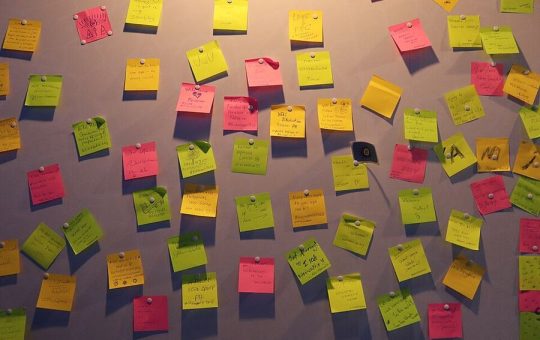
- Paper and sticky notes get the job done simply, quickly, and easily!
- Many teams work remotely these days, and these digital whiteboards make it easier for them to collaborate: Miro and FigJam.
- Mind map software: XMind and MindMeister turn thoughts into visualization.
- Note apps: Apps like Notion, Evernote, or Apple Notes organize ideas into a single location.
- AI assistants: These can provide ideas for angles and questions but do not consider their suggestions as definitive.
There are tools to use for idea generation, but don't use them to replace thinking. The greatest success is achieved when your personal experience and judgement is added in.
Common Mistakes to Avoid
Thinking experts make these mistakes.
- Judging too early. Without criticism, creative flow ceases, and you wind up with a different result. Put off the evaluation task for later.
- Rising up the first good idea. In most cases the first idea will be the obvious one.
- However, not having a clear problem. Without knowing what you are aiming for, you'll not get it.
- Confining questions to similarities. Diverse backgrounds = Diverse options.
- Lack of taking action on ideas. Until you have tested it nothing is worth anything.
How to Choose the Best Ideas
If you can't select from a long list, then it doesn't help. After the idea generation phase comes evideas,on which will help to determine a short plan.
For these ideas award a mark of 1-5:
- How much will it help? – the impact.
- Effort: Is it hard or easy to do?
- Cost: How much does it cost?
- Fit: Is it suitable to your objectives and abilities?
Add up all the scores and compare the highest scores. Next, conduct a small trial, such as a survey, a sample, or a draft. It's better to get real feedback than to guess.
Final Thoughts
Generating ideas is a skill that can be learned and which is developed by practice. You don't need to search for some opportunity to make it.
Describe and clearly state your problem, continue to brainstorm possible solutions, and do not evaluate your list until it is complete. Apply effective brainstorming, mind mapping and SCAMPER techniques and reinforce these with some simple daily habits.
Most importantly, do the best ideas. Test them out on small scales and make changes according to the results. Long-term, you'll come up with more effective ideas with ease.
Begin with 1 problem, 1 timer, and 1 blank page.
FAQs
What is the process of creating ideas and solutions?
Idea generation: develop processes and concepts, solutions, or options to solve a problem. It is the first step in the creative process and usually follows modeling and evaluation and testing.
What is the best way to develop ideas for the generation?
Work on a regular basis with set methods and not just when you are inspired. Maintain a daily notes log, establish short timers, and try out SCAMPER and mind mapping. Weekly revision of notes.
Brainstorming vs. Ideation: What's the difference?
Brainstorming is a technique used to quickly make a list of ideas. The whole process of developing, refining, and generating ideas is called ideation. Brainstorming is one of the elements of ideation.
What is the amount of ideas required in each session?
There is no specific amount. Many people try to get 20 or more, as the first few ideas are fairly obvious. Break away from the boxes and the more original ideas you will come up with.
Is AI helpful in coming up with ideas?
Yes, when you're stuck on ideas, questions, and new angles, AI can assist you. Take them as a basis and then verify, refine, and enrich with your own knowledge.
What is the maximum amount of time allowed for each session?
Most of the sessions are typically 15-30 minutes long. Short sessions keep you energized and prevent over-thinking. Play may be repeated at a later time.