Brainstorming examples in business makes teams understand that a simple brainstorming session can be a new product, a better process or a cost saving plan. Many teams realize that they should take a creative approach. It's not one of the many things that a lot of people know how to do well.
Practical and proven, the scenarios, techniques and steps in this guide. They can be used in a small start-up or a large company.
What Are Brainstorming Examples in Business?
Brainstorming examples in business are problems that happen in real life where a group of people brainstorms lots of concepts over a brief period of time and then determines the most helpful ones. It usually occurs when you have one of the following scenarios: Naming a product, solving a customer problem, creating a marketing campaign, decreasing costs, optimizing processes, etc. More is better than more, but this says nothing about quality. Teams discuss ideas without criticism, collate similar ideas, and poll the group to decide upon the most powerful ideas before developing them into an action plan.
Related reading: our guides to creative brainstorming techniques, ideation workshops and brainstorming in management.
Why Brainstorming Matters in the Workplace
Great ideas are seldom individual efforts. A team with a variety of viewpoints, skills and customer knowledge. This is what makes teams thrive on finding options that one manager may not.
Brainstorming also helps to build trust. When everyone is able to communicate, they feel heard. They are more likely to be in agreement regarding the final decision.
Within the business world, the change typically manifests itself in exemplary brainstorming. The quietest participant in the group shares his ideas and one of his ideas is the winning plan.
For wider coverage of innovation and leadership, see Forbes Innovation.
8 Brainstorming Examples in Business You Can Use Today
The scenarios described below are practical examples only, and do not involve the mention of specific business names. Tailor them to your team, objectives and budget.
1. Product Idea Generation
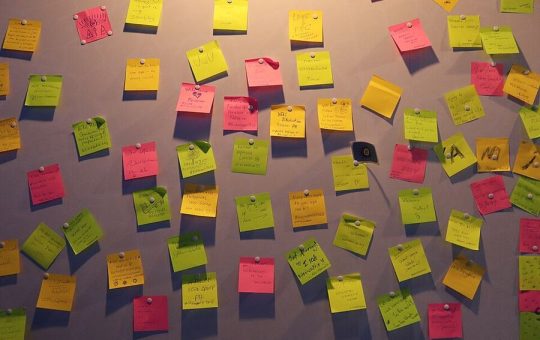
A software development team is considering implementing a new functionality. Each person silently writes 5 ideas on a sticky note. The team divides up the notes into themes and votes.
This is one of the most common brainstorming business examples as it is creative and has a simple voting process.
2.When a Customer Complaint is shared with us, we endeavour to resolve it.
A store continues to receive complaints for slow returns. All support, sales and warehouse staff have a meeting where all elements of the return process are discussed. They then think of ways to reduce the length of each step.
They can be as simple as a return label to be printed, a simple online form or a clearly marked return window.
3. Marketing Campaign Planning
A small brand is having a sale on a season. The team comes up with slogans, email subject lines, social media posts, and partner ideas.
Each category was timed for 10 minutes. Time limits facilitate flow of ideas and keep discussions from going too long.
4. Cost Reduction
A restaurant is asking its employees what they can do to minimize food waste. Cookers recommend smaller batches to prepare. Servers give smaller size portions when requested.
The team goes through a progression of review of two concepts and then they make an assessment after 1 month.
5. Employee Engagement
HR uses staff meetings to find out how they can become more useful. Some of the ideas may be that the meetings be shorter, that everyone follows the same agenda or to have a rotating chairperson.
As with internal business issues, these brainstorming examples in business illustrate that group input assists with internal issues as well.
6. Naming a Product or Brand
A new start-up requires a name. Everyone writes 10 names, regardless how bizarre they are. The team then identifies names that are easy to say, spell and remember.
7. Process Improvement
The operations team tracks the flow of orders from checkout to delivery. They indicate where delays are happening and brainstorm solutions of each, such as automated alerts or improved handoffs between teams.
8. New Market or Service Ideas
A local gymnasium wishes to expand. They come up with suggestions for the team to consider for adding to the list: online classes, corporate wellness programs, or weekend classes. They then rate each idea based on the cost, demand, and effort.
Quick Comparison of Brainstorming Examples in Business
Use this table to match each example with its goal and a fitting method.
|
Example |
Main Goal |
Who Should Join |
Helpful Method |
|
Product ideas |
Add value for users |
Product, design, support |
Brainwriting |
|
Customer complaint |
Fix a pain point |
Support, sales, operations |
Starbursting |
|
Marketing campaign |
Reach more buyers |
Marketing, sales, content |
Round robin |
|
Cost reduction |
Lower waste or spending |
Managers and frontline staff |
Reverse brainstorming |
|
Employee engagement |
Improve team culture |
HR and team members |
Mind mapping |
|
Brand naming |
Find a memorable name |
Founders, marketing |
Rapid listing |
|
Process improvement |
Remove delays |
Operations, IT |
Process mapping |
|
New service ideas |
Find growth options |
Leaders and customer-facing staff |
SCAMPER |
Popular Brainstorming Techniques for Business Teams
For each of the business brainstorming ideas listed above, a method is helpful. A method provides structure, the loudest voice does not take over.
|
Technique |
How It Works |
Best For |
|
Brainwriting |
Everyone writes ideas silently, then shares |
Mixed teams with quiet members |
|
Mind mapping |
Ideas branch out from one central topic |
Seeing connections |
|
SCAMPER |
Prompts: substitute, combine, adapt, modify, put to another use, eliminate, reverse |
Improving products or services |
|
Starbursting |
Ask who, what, when, where, why, and how |
Exploring a problem fully |
|
Reverse brainstorming |
Ask how to cause the problem, then flip the answers |
Finding hidden risks |
|
Round robin |
Each person adds one idea in turn |
Fair participation |
Pick one method per session. Mixing too many can confuse the group.
How to Run a Brainstorming Session Step by Step
The session is kept short and useful by sticking to a simple plan. Follow these steps.
State one definite problem. Ask the question, e.g. How can we reduce return times?
- Bring the appropriate individuals. Use a variety of roles and levels.
- Set the rules. No judging and don't interrupt, build on others' ideas.
- Provide writing time in a quiet setting. Allow each person to write his ideas down individually for a few minutes.
- Share and group. Read aloud ideas and group similar ideas together.
- Vote. Allow everyone to select their favorite options.
- Set owners/dates. If there is no owner for an idea, then it's difficult to get it done.
Most teams feel 30-60 minutes is sufficient for a single subject.
Common Mistakes to Avoid
The best brainstorming examples in business can go awry if the session isn't managed appropriately. Be aware of the following issues:
- Making premature decisions.Reacting too early. It discourages sharing.It discourages people from sharing.
- Allowing managers to speak before you. Others can follow the leader's point of view.
- Without a definite objective. The group veers into general conversation.
- Skipping the follow-up. When there is no one who owns the subsequent step, ideas come and go.
- Having too many guests.Too many guests. Large groups restrict the number of people speaking.
Tips to Get Better Results From Your Ideas
Use these brainstorming examples in business as templates. Swap out the topic, group or approach to meet your requirements.
- Discuss the problem a day before the meeting so individuals can plan ahead.
- Start with outlandish ideas. Ones to use in practice are later.
- Blend two weak ideas together to make one strong idea.
- Test the best concept in the smaller scale before a full release.
- Write down all the ideas – even ones that you do not use at this time – and then use them.
Shared documents and digital whiteboards are also helpful to gather ideas in one place when working remotely.
Final Thoughts
Brainstorming examples in business isn't about having just one of those genius ideas. It's all about providing a team with a safe, easy method for communicating numerous ideas and selecting the best ones.
Business in this guide provides examples of brainstorming for products, marketing, costs, culture and growth, which illustrate this principle. Use a clear question. Do it in a simple way. Maintain equality of the rules.
Primarily, complete projects. Select an idea, designate an owner and give a date. That's what a great session becomes when it becomes real business results.
FAQs
What are some simple brainstorming examples in business?
Simple cases include naming a product, planning a sale, solving a customer complaint, cutting waste, and improving team meetings. Each starts with one clear question and ends with a short list of actions.
How many people should join a brainstorming session?
Groups between two and six may work best. Some teams prefer 5-8 people as a nice range for variety, but not too cumbersome to run.
How long should a business brainstorming session last?
There are 30- to 60-minute sessions that work well the most. Use a timer for each step to keep the group moving.
What is the difference between brainstorming and problem solving?
Brainstorming is about generating lots of ideas. Problem solving is broader. It involves stating a problem, selecting a solution and checking its outcome. Brainstorming is often an initial part of that process.
Can remote teams use brainstorming examples in business?
Yes. Shared documents, digital whiteboards and video calls are available to remote teams. Brainwriting is particularly effective because everyone writes ideas simultaneously.
How do you choose the best idea after brainstorming?
Cluster related ideas; rate each idea according to cost, impact, and effort. Voting also helps. Choose two or three and try them out in small steps.