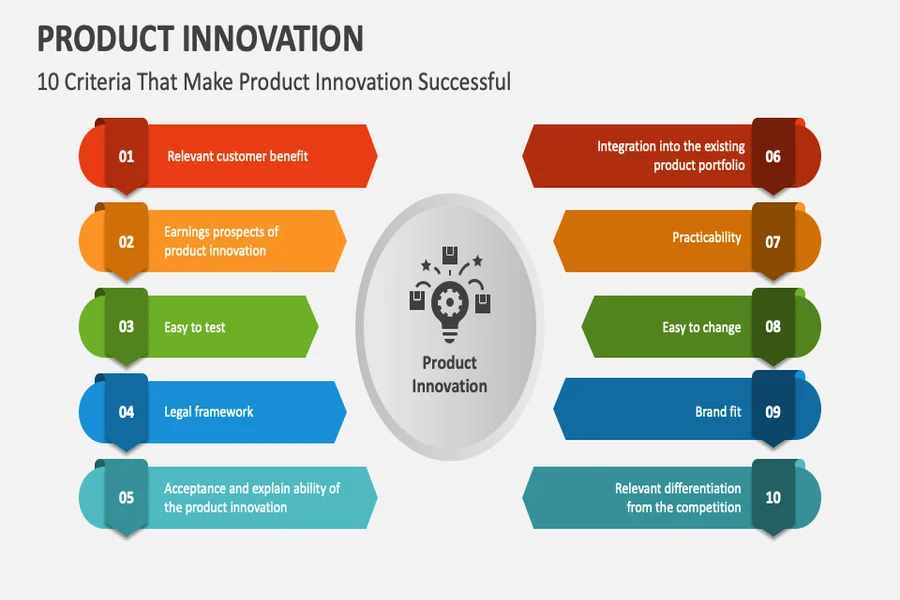
A product innovation charter is a brief document that explains the purpose of a product team developing a new product or feature, the problem that the product will address, the target users, and the criteria for measuring success. It establishes boundaries on scope, resources and risk and provides everyone with a common benchmark. Groups employ it to get stakeholders in sync, make decisions and prevent reinventing the wheel prior to development. Consider it a one or two page contract that converts an idea in a general direction into a more specific, approved direction.
The vast majority of product ideas are not bad products. They faded since no one agreed what exactly the idea was supposed to do. The easiest solution to avoid it is to have a product innovation charter. It provides your team with a clear starting point, a common goal, and a method of saying “no” or “yes” to new requests when they appear.
How many months of a great project you’ve seen get lost and never finish?How many months have you seen a great project go astray and never complete? This guide discusses the nature of charters, content, writing charters and maintaining their usefulness during the work.
Why Many Product Ideas Fail Before They Start
Imagine a typical situation. A manager contributes to a meeting by providing an idea. People like it. Some engineers begin to draw, some engineer is the designer to make some mockups and some sales-man assures it to the client.Some engineers start to sketch, some engineer is the designer who makes some mockups and some sales-man says it will be given to a client. Three weeks later, there is a slightly different picture of what is being built from everyone.
This is because the first phase of innovation is characterized by a lot of assumptions. There’s no one written, it’s for someone, it solves a problem, and done looks like what? Otherwise teams have the same problems foremost in their minds, over and over:
- There is no set limit and scope grows as a result.
- Policies change when senior people change their minds.
- The fundamental value is lost as budget and time gets exhausted.
- Groups debate issues that are resolved in the beginning.
None of these are indicative of a poor team. They are symptoms of misalignment. With a charter, you put those critical decisions into writing before you start the actual work.
What a Product Innovation Charter Actually Does
A product innovation charter works as a project’s anchor. It is not a replacement for a roadmap, product requirements document or a business case. Rather, it is placed above them, and tries to answer another question: why do we do this and what are the bounds?
In reality, a charter accomplishes four things:
It creates shared understanding. This overview of the goal and the problem is read by all concerned—from engineers to executives. This will minimise the number of side conversations and mixed messages.
It supports decision-making. Upon receipt of the new feature request, the team can ask if it aligns with the charter. Otherwise, it waits or is dropped. This is much easier than having to discuss every request individually.
It earns early approval. A charter provides a vehicle for leaders to sign off on. After they sign off, the team has an agenda and justification to resist change that did not form part of the plan.
It exposes risks early. Sometimes, it can be helpful to write down assumptions and constraints, as this can be a way of finding flaws. It will cost less to discover them in a document than in a half built product.
In software, consumer goods, healthcare, finance & other areas, charters are utilized. The form is slightly altered, but the intent is the same.
Key Elements to Include
A good charter is short. Most fit on one or two pages. The goal is clarity, not completeness. These are the sections that matter most.
- Title and summary. One or two sentences that describe the initiative in plain language.
- Problem statement. The specific problem or unmet need, and who experiences it. Use real evidence where possible, such as customer interviews, support tickets, or usage data.
- Target users. A clear description of who the product serves. “Everyone” is not an answer.
- Opportunity and strategic fit. How this work connects to company goals, such as growth, retention, or entering a new market.
- Objectives and success measures. What you want to achieve and how you will know. Pick two to four measures that can be tracked, such as adoption rate, time saved, or revenue.
- Scope. What is included, and just as important, what is not.
- Constraints and assumptions. Budget, timeline, technology limits, regulations, and anything you are assuming to be true.
- Risks. The main threats to success and a short note on how you plan to handle them.
- Team and roles. Who owns the work, who contributes, and who approves.
- Timeline and milestones. A rough sequence, not a detailed schedule.
You do not need to fill every section with long text. A few well-chosen sentences in each are enough. If a section feels forced, it may mean you need more research before writing the charter.
How to Write One Step by Step
A charter is not a matter of format, but of questions. This is an effective process for most teams.
- Start with the problem, not the solution. Record the problems users and/or businesses suffer from today. If you can’t describe the problem in two or three sentences, the idea needs more thought.
- Gather evidence. Grab information, feedback from customers, and market insights. Just a few interviews can help determine if there is a problem and its frequency.
- Define the audience. Name the group you are serving first. The smaller the starting audience, the easier the decision-making process and the quicker the testing.
- Set goals you can measure. Use concrete goals, rather than general terms such as “improve experience”, for example, “reduce onboarding time from 20 minutes to 10”.
- Draw the boundaries. Outline the scope and the limitations of the project. This is the most useful and most important portion of the document as it eliminates any further arguments.
- List risks and assumptions. Be honest. If the plan relies on the approval of a partner or a new technology that must function properly, mention this.
- Share a draft and get feedback. Send it to users and people who will pay for and construct it. Find out if there is something you don’t understand or something missing, and modify.
- Get formal sign-off. After approval, place the charter in a location that is visible for all to see and make the charter the basis of the project.
Depending on the number of people involved, most teams can reach a first draft in a couple hours and a final draft in a week.
A Simple Example
Here is a short, simplified example to show how this looks in practice.
Initiative: Self-service returns portal for an online clothing retailer.
Problem: Customers who want to return items must email support and wait up to three days for a label. Support handles about 1,200 return requests each month, which takes time away from other issues.
Target users: Existing customers who place orders through the website.
Objectives: Cut return-related support tickets by 60 percent within six months. Raise customer satisfaction scores for returns from 3.1 to 4.0.
In scope: Return request form, automatic label creation, status tracking.
Out of scope: Store credit programs, international returns, changes to the refund policy.
Risks: Integration with the shipping partner may take longer than planned. Customers may not notice the new portal without clear communication.
Owner: Head of customer operations, with support from engineering and design.
Notice how little text this takes. Yet anyone reading it knows what the team is building, why it matters, and where the edges are.
Who Should Be Involved
A charter written by a single person is not likely to stand up alone. Those who “buy in” early tend to be those who “buy out” later. A balanced group consists of:
- The person that owns the product or project that creates and maintains the document.
- Engineering or Technical leads, authors of feasibility and effort.
- Design & research – who bring user insight.
- Business or finance stakeholders who attest to the budget and strategic alignment.
- An executive sponsor, who provides authorization and overcomes obstacles.
No need for a great committee. Three to six people are usually sufficient. The important thing is that the proper voices are heard before the work begins, not afterwards.
Common Mistakes to Avoid
Teams that place importance on planning do fall into a few common mistakes when it comes to charters.
Making it too long. A ten page charter turns into a ten page document that no one reads. If it takes longer than a few minutes to scan, cut it out.
Using vague goals. Be the best, delight users, these are phrases that cannot be measured. If there are no numbers, and there is no clear outcome, you can’t determine if you succeeded.
Skipping the out-of-scope list. Teams tend to concentrate on the things they are going to do, and forget why they are not doing them. That’s the space for scope creep.
Treating it as paperwork. If the charter is just “process” and not used, it’s not adding value. It should be a reference for people in meetings.
Writing it alone. A charter that is shared by only one person tends to be opposed at a later stage. The earlier the input the better that will be in the long run.
Locking it forever. There is a natural variation of change. An unchangeable charter will be disregarded over time.
How to Keep the Charter Useful Over Time
The first step is to write the charter. It’s in the use that the value is revealed.
Check it at significant check points, for example, at the end of a discovery phase or before a significant release. Have some brief questions. Is the issue still the same? Have the goals changed? Is it still on scope? If answers change, update the document, inform everyone of changed answers and reasons.
It also assists in embedding the charter into team practices. Connect project tools. Use it as a guide when planning. If a new feature is suggested, bring up aims and ask the question: what does the new feature do in relation to the aims? This way, the charter becomes more of a way of thinking and doesn’t just exist in a file in a folder.
Last but not least, use it towards the end of the project! Compare the results against the success measures you set. This provides you with truthful insights as to what worked and enables you to make better decisions on the next initiative.
Final Thought
Luck doesn’t go into making good products. They are from team members who have accepted a problem, established boundaries, and have a strong purpose to stay within those boundaries. A product innovation charter provides you with that structure with only minimal overhead. Begin small, develop it as a team, and review it as knowledge is acquired. If you have just started a new initiative, it may be the most beneficial hour spent this week to create a product innovation charter.
FAQs:
What is the purpose of a product innovation charter?
It aligns the team and stakeholders on the problem, goals, scope, and success measures of a new product or feature before development starts.
How long should a product innovation charter be?
One to two pages is ideal. It should be short enough to read in a few minutes and clear enough to guide daily decisions.
Who writes a product innovation charter?
Usually the product manager or project owner writes it, with input from engineering, design, business leaders, and an executive sponsor.
How is a charter different from a product roadmap?
A charter explains why an initiative exists and sets its limits. A roadmap shows when and in what order work will be delivered.
When should you create a product innovation charter?
Create it after you have validated that a problem is worth solving but before you commit major time, budget, or development resources.
Can a charter change after approval?
Yes. Update it when facts change, such as new research, shifted priorities, or revised constraints. Share changes with all stakeholders.