Great ideas don’t come from a meeting room; they come from collaboration. With idea crowdsourcing you can get a lot of people’s ideas, and those best ideas will come to you sooner. Providing an overview of the concept of idea crowdsourcing, what it can achieve, and how to do it right.
What Is Idea Crowdsourcing?
The process of collecting thoughts from many individuals, often from their clients, staff, or public, is usually through an internet-based platform (Idea Crowdsourcing) (Collecting thoughts from numerous people, typically from their clients, staff, or public, usually through an internet-based platform known as Idea Crowdsourcing). Participants generate, inspire, and decide on ideas. The organization then takes the very best of the lot and adopts them. It encourages groups to think innovatively, decreases the amount of trial and error, and includes those who know the problem best.
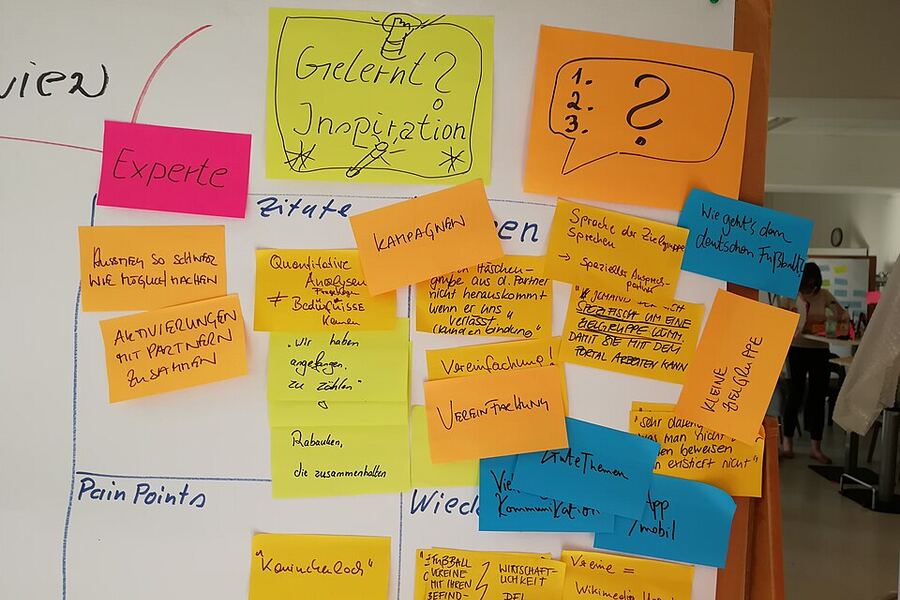
Idea crowdsourcing is really an open brainstorming on a much larger and more widespread scale. You don’t ask a small group; you ask a larger group to give ideas.
Related reading: our guides to what crowdsourcing means in business, idea management and open innovation crowdsourcing.
Other terms that you may hear are open innovation, idea management, collective ideation, and idea generation. All of them have the same objective: Many minds for one problem.
Why Idea Crowdsourcing Is Worth Your Time
Idea crowdsourcing adds other points of view, abilities, and experiences. Those who know the issue best will see things that the leaders will not see.
Some of the benefits that you can expect are abilities,
For wider coverage of business innovation, see Forbes Innovation.
- More variety. The more members the group has, the more ideas the group will come up with.
- Faster input. Collect hundreds of suggestions in days and not months.
- Better engagement. If one feels his voice is heard in a decision, he feels like part of the process.
- Early validation. Votes and comments show the true ideas of users!
- Lower risk. You test usage prior to investment in development.
Types of Idea Crowdsourcing
Not every project needs the same crowd. The right choice depends on your goal.
|
Type |
Who Takes Part |
Best For |
|
Internal crowdsourcing |
Employees across teams |
Process fixes, culture, cost savings |
|
Customer crowdsourcing |
Users and buyers |
New features, product improvements |
|
Open public crowdsourcing |
Anyone online |
Big challenges, naming, design concepts |
|
Expert crowdsourcing |
Selected specialists |
Technical or scientific problems |
Many companies start with an internal group. It is easier to manage and carries less risk. You can widen the crowd once your process is stable.
How Idea Crowdsourcing Works: A Step-by-Step Process
Properly managed, a good process can keep the audience focused on the subject and can make it easier for your team to do their work. Follow these steps.
- Establish one specific challenge. If a person asks a general question, he receives a general answer. Be specific, such as, “What can we do to reduce the wait time for customers by 50%?”
- Set your goal and limits. Establish the budget, time and kind of ideas to be available.time,
- Select the appropriate audience. Match the problem with your target audience. Staff are aware of processes in the organisation. Customers know what they would consider daily hassles.
- Pick a platform. Give the people thorganization. to offer ideas and comments and vote all in one place.
- Start with definite rules. Outline the process for submission, the duration of campaigns, and the process for evaluating ideas.
- Encourage discussion. Comments can be used to help others improve ideas that are not well developed and to develop lines of thought.
- Critically review and assess ideas. Use simple filters in contexts such as impact, cost, effort, and suitability of strategy.
- Be active and provide feedback. Talk about the ideas chosen and those not chosen and why.
- It’s in Step 8 that most teams fall. This is important because if people don’t get an answer, they will not come back.
Key Benefits and Common Challenges
Idea crowdsourcing is powerful, but it is not risk-free. Plan for problems before they appear.
|
Challenge |
Why It Happens |
Simple Fix |
|
Too many low-quality ideas |
The question is too broad. |
Narrow the challenge and add examples. |
|
Duplicate submissions |
People do not read existing ideas. |
Show similar ideas as users type |
|
Low participation |
Little promotion or unclear value |
Share goals and rewards early. |
|
Popularity bias |
Votes favor popular voices. |
Add expert scoring beside public votes. |
|
No follow-through |
No owner for results |
Assign a team to review every campaign. |
Best Practices for Idea Crowdsourcing
Little things accumulate to make a big impact. The following tips can be used for almost all campaigns.
- Don’t overcomplicate it. Explain to them for a long time; otherwise, they will leave. There’s an ideal length: One sentence.
- Enable easy enrollment. More entries are generated via short forms and mobile-friendly pages.
- Lead by example. Encourage managers, team leaders to post initial ideas. It is an example of a good entry for people to follow.
- Be transparent about judging. Communicate to others how ideas are going to be evaluated. Trust is fostered by having things done fairly.
- Recognize contributors. Individuals remain engaged by public recognition, a token of reward or a record of results.
- Respect privacy and right to privacy. Include terms which clarify who the ideas from the students are and how any personal data is utilized.
What to Look for in Idea Crowdsourcing Software
A single form can be used for multiple campaigns. If you’re undertaking a larger project, a set of dedicated software will save you time. Look for the following features:
- Easy to submit ideas via text, pictures, or documents.
- Voting, ranking, and commenting options.
- Organize ideas by theme, using tags and filters.
- Duplicate detection
- Dashboards for analytics to monitor participation.
- Status updates, to keep contributors up to date on progress
- How to make it possible to access private or public campaigns.
In some platforms, AI can also be used to classify similar concepts and to determine trends. This will be useful if there are thousands of entries. But there must be human decision-makers.
Real-World Examples
Some examples of crowdsourcing for ideas include LEGO Ideas and Dell IdeaStorm. Lego Ideas enables fans to come up with ideas for sets, and community voting can propel an idea to review. Dell IdeaStorm invited customers to suggest improvements and vote for their favorites.
The pattern to the these cases is clear. The community had formulated contributions, and the company had shed light on the application of the inputs.
How to Measure Idea Crowdsourcing Success
Don’t evaluate a campaign with numbers of ideas. There’s a higher emphasis on quality and results. Observe a mixture of these signals:
- What percentage of the people who were invited were present?
- Quality of ideas: How many ‘good’ ideas did you get on your first read through?
- Rate of implementation: What percentage of the ideas were implemented?
- Did you save money, make money or improve satisfaction?
- Return participation: Re-occurrence of contributors for the subsequent campaign.
Set these objectives before taking off. It makes it easy and straightforward to report honestly.
Final Thoughts
The key to success with idea crowdsourcing is to consider the crowd as partners, not as a suggestion box. Create a quality question. Create a quality question. Select the appropriate individuals. Provide them with a convenient means of giving and an equitable means of being evaluated.
Then close up the loop. Explain to others the fate of their ideas. That one habit fosters trust and attracts the best minds.
Be conservative; set one challenge and then build from it. It is a good and useful tool when used properly to make sure that ideas that are forgotten turn into solutions.
FAQs
1. So what exactly is the meaning of the term ‘idea crowdsourcing’?
It means getting lots of ideas from others and then listening to those ideas that are best. The group may consist of employees, customers, or members of the public. Submissions and voting are typically done via an online tool.
2. What are the benefits of using idea crowdsourcing?
It can be. Simple documentation and paperwork, at low cost. Rewards and prizes are an extra expense, and there are usually platforms that charge a fee. Choose the appropriate items on your scale.
3. What groups of people should employ it?
Perfect for city governments, nonprofits, schools, large businesses and startups. Any group that wants to change and that has people who want to share is a good group.
4. What is the difference between normal brainstorming and this?
Brainstorming typically takes place in a small group in one meeting. Reach is just part of the equation of crowdsourcing and can be viewed by many more people over the course of days or weeks. It also includes voting and discussion.
5. How do you handle negative or off-topic ideas?
Make the question succinct and the rules close. Add a review step prior to making ideas public. The moderators may add together multi-occurring entries and may remove entries that do not adhere to guidelines.
6. How many days will it take to run a campaign?
Most campaigns will last 2-6 weeks. This provides sufficient time to involve people and not let the energy level drop, but not so long that it captures attention. Depending on the size of the audience, make adjustments accordingly.