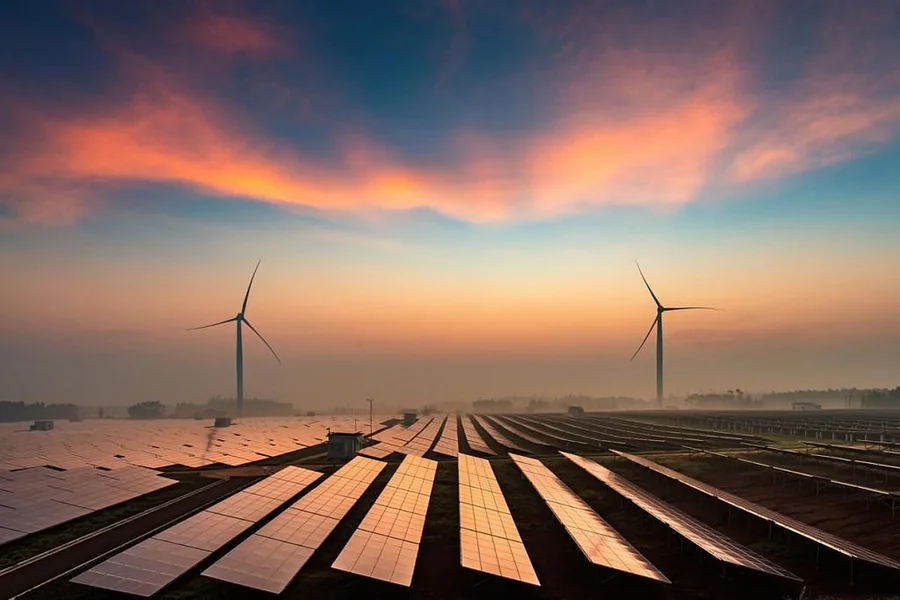
The nature of power is shifting in the world. Slowly, but surely, clean energy is taking the place of coal, oil & gas power generation. This is leading to stress on the older systems. It is also providing avenues for new ideas.
The energy transition disruption—challenges and innovation opportunities—is now a topic for all businesses, investors, and governments. This guide illuminates the changes and the hard, and where smart growth can occur.
Quick Answer: What Is Energy Transition Disruption?
Energy transition disruption: challenges and innovation opportunities is about the disruption and innovation opportunities that arose during the world’s energy transition from fossil fuels to clean energy. Initial investment, grid restrictions, supply chain, and job transition are some of the challenges. This includes renewables, energy storage, smart grids, new business models, and green hydrogen. The secret of success is in the smart policy and the continuous investments and technology that can be scaled up.
Understanding Energy Transition Disruption
Energy transition: a long-time process of change from one basic energy system to another. These days, it’s all about moving away from high-carbon fuels and towards low-carbon energy.
This applies to everything and has an impact. Energy is necessary for energy plant operations, pipelines, car production, farms, and homes. This means that when the base moves, the entire chain moves with it.
Understanding the burning issues and innovation opportunities of disruption to energy transition requires a 20/20 vision. The worth of the old assets decreases. It is taken on by new industries.
Why This Shift Is Different From Past Changes
Energy sources before have changed, for example, from wood to coal, mostly because of the price and convenience. It’s also motivated by climate goals, energy security, and public pressure.
That is, governments, companies, and citizens push all together. Planning is rushed, and if not well planned, then the risk is increased.
Major Challenges in the Energy Transition
There are a number of distinct challenges and innovation opportunities in the energy transition disruption. All of them need a unique solution.
- High Upfront Investment
Creating revenue in clean energy projects can take a lot of capital investment. Increasing investment is necessary for wind farms, solar parks, the grid, and charging infrastructure.
Lower interest rates are generally offered to developing economies. The benefits of this are obvious in the long-term, but it can also have a negative effect on the projects.
- The Grid Stability and Infrastructure Limits provides an understanding of issues that are causing the grid to be unstable and the limits of the grid.
Solar and wind are weather dependent. The capacity to generate power varies throughout the day and between seasons.
A large number of grids were constructed to provide regular, single-direction electricity supply from big power stations. Since then, they are having to cope with many micro-sources, bidirectional flows, and growing demand for electric vehicles and heat pumps.
- Just two additional pressures are material and supply chain.
There are just two more pressures: material and supply chain.
Lithium, cobalt, nickel, and copper are some of the minerals needed for batteries, solar panels, and wind turbines. Mining and refining take place in a few countries.
This introduces volatility and a risk of supply. Also asks questions about environmental and social regulation of mining.
- Workforce and Community Impact
The job security of coal, oil, and gas workers is unclear. One fuel industry could supply the entire town.
It requires retraining, local investment, and sincere communication for a fair transition. These are missing, and if so, public support can fail.
- Policy Uncertainty
Investors should have guidelines. Subsidy variability, carbon prices, and permits are more challenging to finance projects.
Delays also occur in approvals to new lines and new power plants.
Key Challenges at a Glance
| Challenge | Why It Matters | Who Is Most Affected |
| Upfront costs | Delays clean projects | Developing markets, small firms |
| Grid limits | Risks: outages and waste | Utilities, consumers |
| Mineral supply | Raises costs and risk | Battery and EV makers |
| Job shifts | Threatens local economies | Fossil fuel workers |
| Policy gaps | Reduces investor trust | Developers, lenders |
Innovation Opportunities Created by Disruption
There are also market needs identified for each challenge. The positive side of disruption in the energy transition is that when there is a challenge, there is also an opportunity for innovation and vice versa.
Better Batteries and Energy Storage.
Storage can help to reduce the volatility of supply and demand. Batteries have the ability to store excess solar electricity during the day and dispense it during the night.
The quest for better, longer-lasting, and less expensive batteries is on the boil, with new battery chemistries being investigated. Other storage options such as pumped hydro and thermal are also used.
Smart Grids & Digital Tools
Demand prediction and real-time power flow control can be done with sensors, software, and artificial intelligence. These are tools that can assist utilities to cut down waste and react quicker to issues.
DRPs enable participants to modify their electricity usage during the time when it is less costly or cleaner.
Green Hydrogen and Clean Fuels
Hard-to-electrify sectors, such as steel and shipping, as well as some chemical production, may be able to benefit from hydrogen generated with renewable electricity.
Costs and infrastructure remain as challenges, and careful pilot projects and continued policy efforts are required to make progress.
Distributed and Community Energy
Local energy cooperatives, rooftop solar, and microgrids offer greater power control. In remote areas or low grid strength areas, they can also enhance resilience.
Circular economy and recycling.
Batteries and solar panels can be recycled, thus saving the need for the extraction of new materials. It’s a source of new employment opportunities and new business lines too.
Innovation Opportunities by Sector
| Sector | Key Innovation Area | Possible Benefit |
| Power utilities | Smart grids, storage | More stable supply |
| Transport | Electric vehicles, charging networks | Lower tailpipe emissions |
| Industry | Green hydrogen, efficiency tech | Cleaner heavy production |
| Buildings | Heat pumps, smart meters | Lower energy bills |
| Finance | Green bonds, climate risk tools | New investment channels |
How Businesses Can Respond
Businesses don’t have time for ideal conditions. But planning early can help companies be better prepared for disruption associated with energy transition—challenges and innovation opportunities will emerge.
Some action points:
- Monitor energy usage and emissions. What you can’t track you can’t improve.
- Improve efficiency first. The most cost- and energy-efficient is to conserve energy.
- Enter into clean power contracts. Negotiate clean power contracts. The long-term renewable contracts can aid in smoothing expenditures.
- Pilot new technology to study its effectiveness on a restricted basis. Pilots find ways to minimize risk prior to large expenditures.
- Build partnerships. Partner with startups and universities and work with utilities.
- Prepare your workforce. Provide training to staff in new skills early.
The Role of Government and Policy
Policy leads the way. Investors have faith in a clear target with a fair carbon pricing, as well as shorter permits.
Private lenders may not deem an innovation to be viable; public funds can fund such innovation. It is also essential to support those affected workers and regions to maintain public trust.
A strong energy transition disruption policy can be a crucial part of the disruption, as energy transition can either be a disruption or a chaos, and strong policy can make the difference between the two.
The Road Ahead
The movement of the transition will not be in a straight line. There will be differences in the speed at which some regions move. There will be a lot of changes in terms of costs, politics, and technology throughout the process.
However, it is very clear which way it goes! Energy systems are local, digital, and cleaner. The first movers will likely get the advantage. Energy transition disruption is not a risk but a long-term planning opportunity for challenges and innovation.
Final Thoughts
It’s never easy changing. Costs are actual, the power grid is under strain, and for some, futures are uncertain. These are questions that are worthy of a real look.
The same disruptions are also fueling some of the most handy innovations this time. New storage technologies, smart grid solutions, cleaner fuels, and local energy models are already becoming a reality.
The key is to take action with a strategy. Measure, test, partner, and adapt. Energy transition disruption: challenges and innovation opportunities is an area of interest for company leaders, policymakers, or just curious individuals or groups to follow. Those who prepare will receive what they need at a later time.
FAQs
What is energy transition disruption: challenges and innovation opportunities in simple words?
It means the problems and new chances that appear as the world moves from fossil fuels to clean energy. Old industries face pressure, while new technologies and businesses grow.
What is the biggest challenge in the energy transition?
There is no single answer. Grid readiness, high upfront costs, and supply chain risks are among the most common concerns. The biggest challenge often depends on the country and the sector.
Which technologies offer the best innovation opportunities?
Energy storage, smart grids, green hydrogen, heat pumps, and battery recycling are strong areas. Each solves a real gap in today’s energy system.
Does the energy transition create jobs or reduce them?
Both can happen. Fossil fuel jobs may decline in some regions, while clean energy, grid, and efficiency jobs grow. Retraining and local support are important to make the shift fair.
How can small businesses prepare for energy transition disruption?
Start with an energy audit and focus on efficiency. Then look at rooftop solar, clean power contracts, or electric vehicles where the numbers make sense. Check for local incentives.
Why is policy so important in this transition?
Clear and stable policy reduces investor risk. It also guides markets toward clean options and helps protect workers and communities during the change.