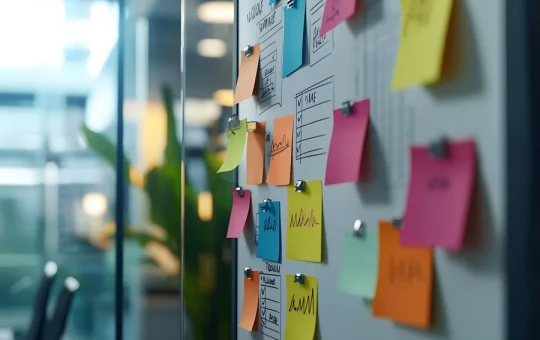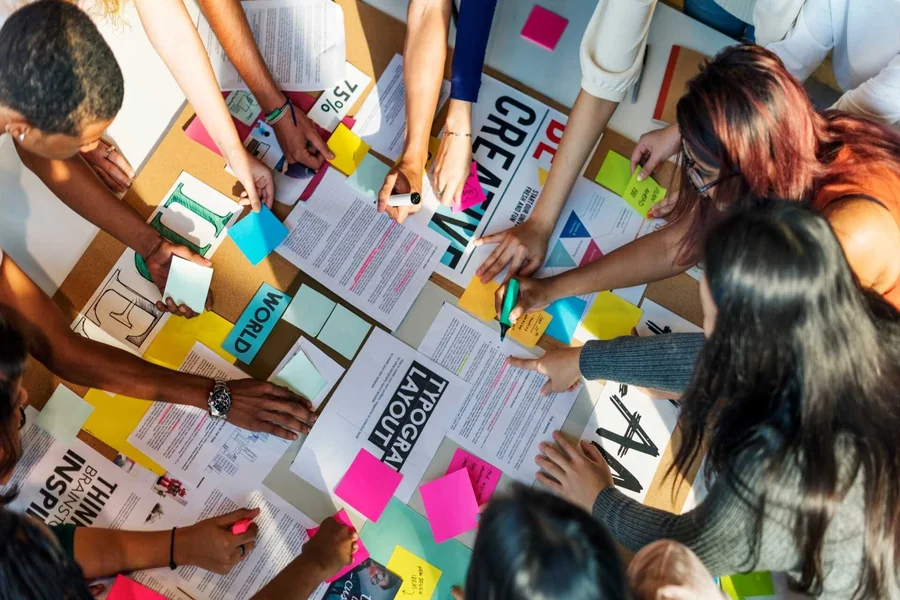
Creative strategic thinking involves the ability to think outside the box, as well as to plan effectively and objectively towards a set of goals. It means rethinking the problem, brainstorming several options and then choosing the one that will help to achieve an overall success. You may not be quick to jump into something, but you ask questions, make assumptions and then plan an innovative and efficient solution. It is used in work, career, education and life to make better use of resources to solve problems.
There have been times when the standard solution just didn’t solve the problem. We did our best, did the same thing, and we got the same results. There’s another path to go along with creative strategic thinking. It helps you step back, broaden your perspective and develop a plan to help you move forward.
Here you will learn what the skill is, why it is important, how to develop it even if you’re just starting out.
What Is Creative Strategic Thinking?
Creative strategic thinking joins two mental habits that usually live apart. Creative thinking results in new ideas. Strategic thinking takes those ideas and gives them direction and purpose and makes them a plan.
Creativity alone can go astray. You may have lots of ideas but not a clear idea of how you can apply them. A strategy by itself can come across as inflexible. Having a good plan but no fresh approach to make it stand out.
Ideas that serve a goal are the result of working together. Let’s use an example of a small bakery that needs more customers. An all-creative approach could result in 12 tongue-twisting tastes. One could go toward a discounter approach if it is a strictly strategic one. The creative strategic approach is to ask yourself who the ideal customer is, what do they lack and what new product or service offer would help fill that void at an affordable price?
Why Creative Strategic Thinking Matters Today
Things change rapidly in work and living. Tools, markets and expectations change annually, and old playbooks are worthless. Those who are flexible and foresee the situation have a huge edge.
This skill is important for a number of reasons:
- It assists you to solve a problem that doesn’t have an apparent answer.
- It lessens the likelihood of copying the behavior of others.
- It enhances decision making as you consider multiple choices before making a decision.
- It helps you feel good when things go wrong in the plan.
- Employers, managers and business owners all like it.
It’s not a leadership position that you have to have to benefit. The ability to set a cost estimate is the same skill that a student applies to a project, a freelancer uses to price a service, and a manager uses to establish a team goal.
The Core Elements of Creative Strategic Thinking
The skill is dependent upon a few interrelated skills. Once you have the understanding of each one, it’ll be easier to practice them on purpose.
Curiosity. Ask questions before accepting answers. What is the reason this problem is there? Who is affected? What has been done?
Big-picture awareness. Take a broader view of the task and how it integrates with plans, timelines and resources.
Idea generation. You create multiple options rather than go with the first one. More often than not, the more you have, the better the quality will be.
Critical judgment. Test your ideas in the real world. Is this affordable? Is it realistic? Is it aiding in the mission?
Flexibility. You are willing to change or eliminate a plan if new information comes along.
These five elements, when they come together, your thinking becomes open and focused.
Creative Thinking vs. Strategic Thinking: Key Differences
It helps to see how the two modes differ before learning to blend them.
| Aspect | Creative Thinking | Strategic Thinking |
| Main focus | Generating new ideas | Planning toward a goal |
| Time view | Present possibilities | Long-term direction |
| Typical question | “What else could we try?” | “What should we do, and why?” |
| Risk | Ideas without direction | Plans without originality |
Neither is better than the other. Strong thinkers move between both modes, first opening up options, then narrowing them with purpose.
How to Build Creative Strategic Thinking Skills Step by Step
This skill can be practiced just as with any other skill. The following steps provide an easy procedure to follow.
- Define the actual problem. It is very common to fall into a solution before the problem is actually solved. Put the problem into a single sentence. If the sentence is not specific, your answers shouldn’t be either.
- Gather context. Consider facts, previous outcomes and the needs of the individuals concerned. The best ideas stem from quality information.
- Generate many ideas. Set a timer for 10 minutes and make as many ideas as you can come up with. Do not judge yet. Add a couple of the weird ones.
- Challenge your assumptions. Ask yourself what you take for granted. If a rule seems set in stone, consider the question, what if it didn’t exist?
- Evaluate and select. Review your ideas against your goal, budget, and timeline. Choose one or two that best fit.
- Make a first small step plan. Identify the steps that you can take starting this week to implement the selected concept. A clear first step will maintain momentum.
- Review and adjust. Once you’ve done something, see what occurs. Maintain and adjust what is effective and beneficial; modify what is not.
Practical Techniques You Can Use Right Away
It’s easier to do with some simple tools. None of them are dependent on special software.
Mind mapping. On a page, write your central problem in the center, and draw out related ideas. This will display relationships you might not have noticed.
The 5 WHY method. Repeat the question 5 times in a row, why. Every answer brings you one step closer to the real answer.
Reverse thinking. Ask what you can do to make the problem worse. The answers may provide clues as to what not to do and what to do differently.
Scenario planning. Envision the future in three ways: the good, the average, and the hard one. Next, question how the plan would fare in each.
Forced connections. Choose two unrelated items and ask, “How could one improve the other?” This takes your mind to new horizons.
Real-Life Examples of Creative Strategic Thinking
Examples clarify the idea. Think about these typical scenarios.
A small eCommerce store realised that people were leaving their shopping carts behind. The owner’s research is into reasons why people left rather than cutting prices. The primary reason was “Surprises with shipping.” The shop was able to decrease shopping cart abandonment while not negatively impacting profits by providing shipping costs upfront and free delivery once a threshold is reached.
A teacher wished that the students were more active in class. Instead of adding more rules she made lessons into a series of mini team challenges. There was a higher participation rate, as the format provided a motivation for the students to be involved.
A freelancer had a hard time obtaining a regular job. She started to back-pedal and looked at one area where she felt her skillset would fill a genuine need and developed her portfolio around that. Within a few months she began to have a regular income.
The general pattern of each case is to understand the problem, consider options, and select a targeted action.
Common Barriers That Block Creative Strategic Thinking
Even people who can, get stuck. Understanding the common pitfalls will enable you to identify them, and avoid them.
- Avoidance of errors. If errors cost, they hold on to safe and familiar notions.
- Rushing to answers. Speed is productive, but sometimes forgoes exploration.
- Habit and routine. Sticking to the same approach assumes you save effort, but also restricts your thinking.
- Information overload. When you have a lot of data and don’t have a question you may end up getting confused.
- Spending too much time alone. In different perspectives, there may be gaps that you aren’t aware of.
The remedy is not an usually spectacular one. When stuck, slow down, ask better questions, and seek another opinion.
Daily Habits That Strengthen Creative Strategic Thinking
Practice makes perfect. In the long run, small details can make a world of difference.
- Read outside of your comfort zone. Brainstorming new solutions is often inspired by ideas from other industries.
- Bring an observation book to make notes about observations, questions and half formed ideas.
- Review goals and progress for a bit every week.
- Discuss with others who have differing views.
- Go for a stroll or rest from screen time. People who find ideas before they try to push them do find them when they don’t try.
- Ponder upon important choices. Ask students what went well, what didn’t go so well and what they’d do differently.
These are not time consuming. It’s crucial to follow a schedule.
Using Creative Strategic Thinking at Work and in Life
In professional activities, this ability comes handy in case they are required to develop plans, handle customer problems, improve processes, and share information that is believable for the decision makers. Moreover, it is helpful in building up one’s career since individuals with futuristic outlook and who share innovative ideas will definitely be recognized.
It helps them in planning their budgets, setting goals, buying expensive things, and making decisions regarding change in jobs or relocation. You do not make hasty decisions but rather contemplate, evaluate it according to your priorities, and then take a step.
The situation changes but the strategy does not – widen your horizon, and then move back to your goal.
Final Thought
Creative strategic thinking is not a talent reserved for a few people. This is a “mindset” and anyone can build it through practice. Start with a well-defined problem, leave room for exploration and choose a route that will get to the problem. Along the way you will discover that you are responding with less energy and creating with more energy. Choose one technique from this guide and do it for a week. Making creative strategic thinking a strength is a small daily effort.
FAQs:
- What is creative strategic thinking in simple words?
It is the skill of coming up with fresh ideas and turning them into a clear plan that supports a specific goal. - Can creative strategic thinking be learned?
Yes. Practices such as asking better questions, brainstorming many options, and reviewing results can improve it steadily. - What is the difference between creative and strategic thinking?
Creative thinking generates new ideas, while strategic thinking organizes choices into a long-term plan. Together they produce practical, original solutions. - Why is creative strategic thinking important in business?
It helps teams solve unclear problems, stand out from competitors, and adapt when markets or customer needs change. - What are some simple exercises to improve it?
Try mind mapping, the five whys method, reverse thinking, and scenario planning. Each takes only a few minutes. - How long does it take to improve this skill?
Many people notice better results within a few weeks of regular practice, though deeper growth comes with time and experience.