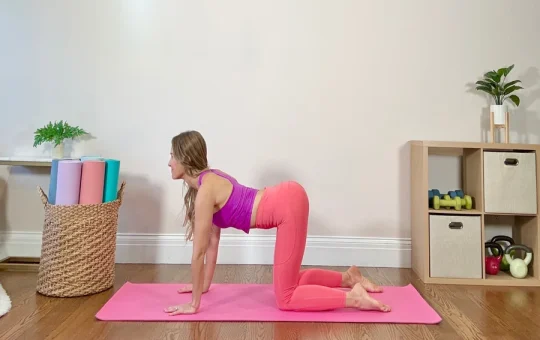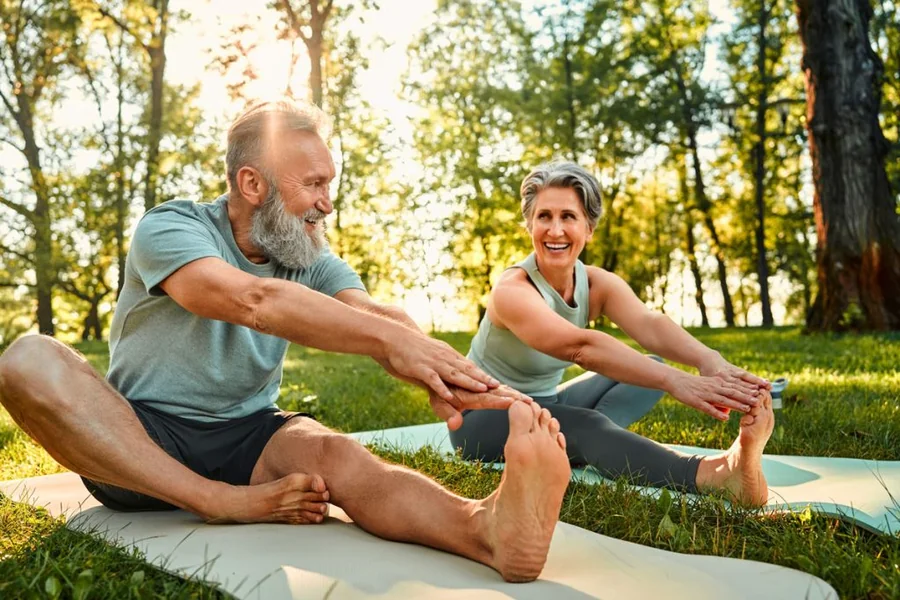
One of the easiest methods to promote healthy movements is stretching. It doesn’t need to be a costly piece of equipment, difficult exercises, or hours of exercise. Doing simple stretches periodically can free up muscles and make life easier.
Knowing the benefits of stretching for flexibility and mobility will make it easier to create a well-rounded fitness program. Flexibility is the term used to describe the ability of your muscles to lengthen during a normal range of motion; mobility refers to how easily your joints move through their normal range of motion. These terms are similar, but not identical.
Stretching can be beneficial, but only when performed regularly and properly. Simple stretches may help increase movement, decrease stiffness, and support physical function; they can be incorporated into an exercise routine or daily activities, for those who sit much of the day.
What Is Flexibility?
Flexibility is the capacity of muscles and connective tissues to easily extend.
The flexibility of the hamstrings, hips and lower back are just some of the factors that allow you to bend forward and reach towards your toes.
The level of flexibility is different for each individual. Flexibility is affected by age, activity level, genetics, previous injuries and daily routines.
There is no need to be super-flexible to be healthy. The aim is to be sufficiently flexible to move around whilst exercising and with everyday activities.
Stretching can over time help you to gradually increase the range of movement your muscles can achieve.
What Is Mobility?
Mobility refers to your ability to actively move a joint through the range of motion that it allows you.
It’s not just about the flexibility of the muscles. Mobility is also influenced by joint structure, muscle strength, balance and coordination and control.
For instance, reaching for toes is a degree of flexibility. A controlled deep squat is a full body movement which demands mobility in the hips, knees and ankles.
Enhancing mobility can make walking, bending, lifting, reaching and climbing stairs seem easier.
How Stretching Helps Flexibility & Mobility
Stretching can help to maintain, and slowly improve, ROM of muscles and joints.
Muscles can become tight or stiff when they are not used for extended periods of time. A gentle stretch encourages them to move through more of an opening.
Stretching can also help you to become more comfortable when in a position that, previously, you thought was limited.
Flexibility can help with mobility; flexibility of muscles may help joints to move more freely. But strength and control also play a role in mobility.
This is why stretching is best done in conjunction with a regular exercise and strengthening routine.
The goal is to stretch May Reduce Everyday Stiffness
Many people get on the computer, watch television, or sit at their desks for several hours every day.
When sitting in the same position for a long time, the body may develop rigidity in some parts. Examples include the hips, shoulders, neck, hamstrings and lower back.
Short periods of stretching can help to get people moving and help to relieve any stiffness.
For instance, getting up every hour to stretch out your hips, shoulders and legs in a gentle manner can make you feel more comfortable.
Stretching may be more effective if it is done in several short periods during the day.
Stretching can help improve posture
Muscles can be weak, stiff, and postured, all causing poor posture.
Those who sit for extended periods can feel tightness around the chest, hips or shoulders.
The stretching of these areas can help to keep them easier to maintain an upright position.
But stretching isn’t a solution to all posture issues. Building up strength in muscles supporting the spine, shoulders and hips is also crucial.
Stretching, strengthening and frequent movement, taken together, generally offer better support for postures.
Stretching to enhance exercise movement
Sufficient flexibility and mobility are needed for many exercises.
Coordinated movement at the joints is essential for all types of squats, lunges, overhead presses, running, cycling, and recreational activities.
Exercises may be uncomfortable or challenging to do perfectly due to limited mobility.
Stretching may be helpful if certain muscles inhibit movement. For instance, the tightness in calf muscles can impact the ankle’s movement in a squat.
Incorporating mobility exercises and stretches into your program may help you to execute movement with greater control.
However, the importance of good technique cannot be overstated and forces should not be used to gain more ROM.
Before exercising: Dynamic stretching.Dynamic Stretching Before Exercise
Dynamic stretching includes a range of controlled movements that stretch the muscles and joints to a comfortable range of motion.
Examples include:
- Arm circles
- Leg swings
- Walking lunges
- Hip circles
- Gentle bodyweight squats
Some dynamic movements can be helpful prior to exercise as they will prepare your body for activity.
Slowly progress through increased joint mobility, as well as muscle activation.
Long static stretches may be better after strenuous activity, but a short dynamic warm up may be more appropriate before strenuous activity.
Static Stretching After Activity
Static stretching typically consists of a stretch that is held in a comfortable range of motion for several seconds.
These can be calf stretch, hamstring stretch, shoulder stretch or quadriceps stretch.
Static stretching is frequently done after exercise or in a dedicated flexibility workout.
Just bearable tension should be felt, not sharp pain.
It is a typical stretch to hold it for 15 to 30 seconds. Others might keep stretches longer, as per their comfort and objectives.
The most crucial is the avoidance of any type of active jumping or forcing the body past a comfortable variety of motion.
Stretching May Healthy Aging
As people age, they may lose some flexibility and mobility, particularly as their activity levels decrease.
The regular use of movement can keep the adult independent and continue with his daily activities more easily.
Stretching can help with reaching over your head, bending down, getting dressed, walking, or moving around the home.
For older adults, especially, activities that involve flexibility, balance, walking and strength training may be beneficial.
The idea is to get comfortable and controlled movement, not extreme ranges of motion.
How Often Should You Stretch?
It’s better to be consistent than to do a long stretch once in a while.
Stretching several times a week can be helpful for many people. But, if you can fit in short daily sessions, they can be effective, too.
- You could stretch:
- After walking or exercising
- When you’re not working at your desk,
- In the morning
- Before bed
- Remaining in one position for extended time.
- Five or ten minutes can be helpful.
Work primarily on those areas that are firm or that are significant in your daily activities.
Do not over stretch
Stretch must not cause pain.
Attempting to move a muscle further in a direction may cause discomfort and potentially exacerbate the risk of strain.
Walk slowly and don’t walk if it hurts.
Stretching muscles when they are warm is generally better than doing static stretches right after getting out of bed or before the start of vigorous activity.
Individuals with injuries or arthritis or joint concerns may wish to consult a qualified health care or rehabilitation professional.
Mix Stretching With Strength Training.Examine Stretching With Strength Training
It is not enough to be flexible to be mobile.
There should also be sufficient strength in your muscles to regulate the range of motion that is available.
For instance, increasing the flexibility of your hip may help your leg move longer, and strong muscles control the movement.
Stretching can be beneficial when coupled with resistance training like squats, lunges, rows, presses and other activities for overall physical function.
Other activities like walking, swimming, yoga, or other means of transportation may also help with healthy mobility.
Final Thoughts
Learning how stretching promotes flexibility and mobility can make stretching beneficial in your daily routine.
Stretching regularly can help increase muscle flexibility, decrease the feeling of stiffness or help support joint movement and make everyday mobility more comfortable. Stretching is best when combined with other fitness activities, such as strength training, balance exercises and regular physical activity.
There’s no need to be overly flexible. Instead, concentrate on keeping moving in a comfortable way that is appropriate to your lifestyle.
The few minutes of regular, gentle stretching can lead to a more comfortable, active life.