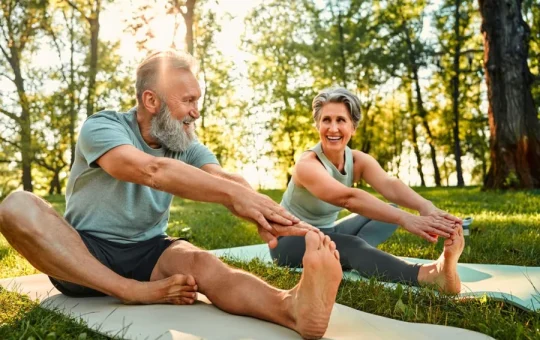
The importance of being active increases with age. Many people take strength, walking or cardiovascular activity into consideration when they think of exercise, but mobility is another aspect of healthy ageing. All about mobility exercises and how it relates to aging is about having comfortable movement, independence, balance and being able to do the activities of daily living.
Mobility is the ease and efficiency of your joints in their full range of motion. With good mobility, one can bend, reach, turn, squat and walk more easily, and carry out daily tasks more easily. Older people might experience reduced flexibility in the joints and in their muscles, and movement may feel uncomfortable. She is more likely to maintain more fluid mobility if she does regular mobility exercises.
Mobility training doesn’t have to be complicated! The consistent use of simple movements can assist with joint function, posture, balance and comfort in daily activities.
As people grow older, what happens to their mobility?
As people get older, their bodies change. Muscle may deteriorate over time, joints may be less flexible, and connective tissues may become tougher. Lifestyle changes, health issues or work routines can also reduce physical activity.
As the level of movement decreases, ordinary tasks can begin to seem more difficult. It might take more effort to get up from a chair, reach up into a cupboard, tie shoes, and even turn to see what is behind them.
Mobility loss does not always occur quickly. It can be a gradual process. Being sedentary for long periods of time and avoiding some types of movement can lead to stiffness over time.
Frequent movement awakens the body to keep it utilizing the range of motion it has.
As you grow older and why mobility exercises are important
Knowing the benefits of mobility drills as you get older can motivate you to practice them. Mobility is not just as important as flexibility. They can impact your movement in the day, whether it is easy or not, and whether you do it with confidence or not.
Well mobility enables joints to move through functional ranges comfortably and muscles to move together smoothly. This can make everyday things simpler and might help people keep physically active.
Mobility training can also be paired with other exercises, such as walking, resistance training, swimming, cycling, and others.
Assists in keeping joints moving
Joints are designed to move. Their movement should be moved through them regularly through comfortable ranges to help maintain normal movement patterns.
Shoulder mobility exercises can make reaching overhead easier, for instance. Hip mobility movements can be used to facilitate walking, sitting and climbing up and down stairs. The mobility of your ankles may affect the way you walk or function in a squat.
Some joint movements can also be helpful to ease stiffness sometimes experienced after sitting for extended periods.
It is not to try to move the joint too far. Mobility work should be somewhat controlled and comfortable.
Supports Everyday Independence
The major advantage of being mobile is that people can continue to function normally, without help, for their daily needs.
There’s more mobility required for daily activities than most people think. Walking up and down the street, entering and exiting a car, rising from a chair, putting on clothes, preparing meals, doing chores, and carrying heavy items like bags of groceries require multiple joints.
These activities might seem more manageable when mobility is preserved.
Being able to carry out everyday movements is an important factor for older people to maintain their independence and quality of life.
May enhance balance and stability
May develop balance and stability.As you get older, the importance of balance grows. Balance is influenced by joint movement, coordination, muscle strength and vision.
If there is limited movement in the ankles, hips or back, this could make some movements harder.
Mobility exercises can be used to practice a controlled movement and promote awareness of the joint position.
Mobility and balance/stability exercises may be effective for maintaining stable movement.
Ankle circles, controlled leg movement, gentle hip rotations and supported squats are some simple exercises that can get several parts of the body working together.
Supports Better Posture
People generally live sedentary lifestyles these days. Sitting has the potential to cause tight hips, rounded shoulders and stiffness in the upper back over time.
Some of these movement patterns can be offset by using mobility exercises.
There are gentle stretches that help to open the chest, rotate the shoulders, move the spine and stretch the hips that can help you more easily maintain an upright posture.
Maintaining good posture is not about tensing the body. Rather, it is about being physically able and mobile enough to work and move easily between different areas during the day.
It is sometimes just as essential to try to change positions often as to try to get one supposedly perfect position.
Helps You Continue Exercising
Other forms of exercise can also be uncomfortable with mobility issues.
Individuals that have poor mobility in the ankle or hip may struggle with squats. Some exercises for the upper body may be challenging due to the limited range of motion of the shoulders. Some recreational activities may be affected by stiffness in the spine.
Incorporating “mobile” exercises into an exercise program could be beneficial for preparing the body for movement.
A brief mobility stretch prior to walking, resistance training or other exercise can help to slowly ramp up exercise and prepare muscles and joints.
Mobility exercises also can be done individually as a quick daily routine.
The terms mobility and flexibility are not synonymous
While mobility and flexibility go hand in hand, they’re not synonymous.
Flexibility is usually defined as the extensibility of the muscle. Mobility is a broader term that describes the movement of a joint in relation to its range of motion, with the muscles surrounding the joint controlling the movement.
There are all sorts of flexibility and mobility exercises that might include stretching.Flexibility and mobility exercises may include a stretch or be an active exercise.
For instance, a hamstring stretch is primarily a stretch for flexibility. Slowly moving the hip through a controlled range involves mobility.
Stretching and mobility exercises can be a part of a balanced routine.
Simple Mobility Exercises for Older Adults
Mobility exercises don’t have to be complicated or time consuming. A lot of them can be done in the comfort of your home.
Some helpful motions can be:
- Shoulder circles
- Gently performed neck rotations
- Ankle circles
- Hip circles
- Seated spinal rotations
- Arm reaches
- Heel-to-toe movements
- Controlled knee raises
- Supported bodyweight squats
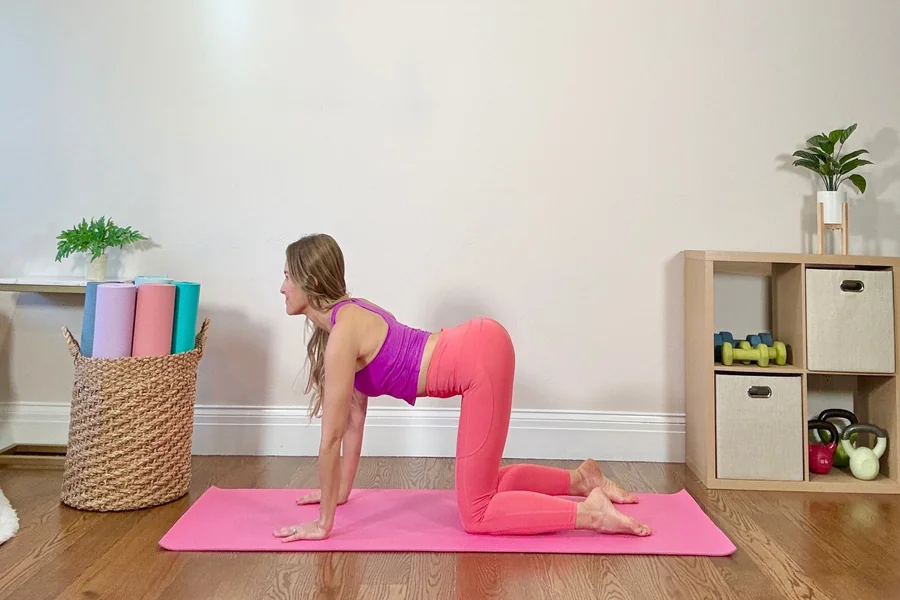
- Cat-cow spinal movements
- Gentle lunges
- Wrist circles
Slow and controlled movements should be used. Do not over-activate or push joints into awkward positions.
5-10 minutes of mobility work can be beneficial if it is done consistently.
How Many Mobility Exercises Per Day?
Mobility exercises can typically be done regularly because they are typically low intensity.
A few people add in a few mobility movements to their morning routine. Some people do them before or after sitting for awhile.
It’s better to repeat a long routine often, than to do it once.
You might begin with five minutes a day, and practice on areas where you often feel “stiff,” like the upper back, hips, shoulders and ankles.
It may be easier to make mobility training a habit if you slowly build up your program.
Move within comfortable range:
Mobility exercises should NOT produce sharp or intense pain. A few stretches might be felt but movements should be controlled.
Those suffering from arthritis, previous injuries, joint replacements, balance problems, or other medical issues may require some modifications to exercises.
Doctors or physical therapists can give personal advice if movement hurts, or if certain medical conditions interfere with moving during exercise.
Some mobility exercises might be safer with the support of a chair, wall, or countertop.
Mix in Mobility + Strength + Activity
Mobility training is best used in conjunction with an active lifestyle.
Strength training keeps muscles healthy to support joints and movement in daily life. Walking and other aerobic exercise enhances heart health and stamina. Balance exercises can help improve coordination and confidence.
Mobility is used to join these together and enables the body to move easily in various positions.
It’s not too difficult to design a simple weekly program that incorporates walking, resistance training, balance work, and a few minutes of mobility work every day.
Final Thoughts
As the years go by, mobility becomes more and more important. Movement on a regular basis helps keep the range of the joints, assists your balance, and helps keep your posture good and make daily activities easier.
If you know what mobility exercises are and why they’re important as you grow older, you’ll be more inclined to pay attention to not only how much exercise you get but how comfortable your body feels.
It doesn’t require complicated exercises or any special equipment. Gentle rotations of your shoulders and hips, even ankle exercises, spinal rotations and more controlled movements can be incorporated into your day in a few minutes.
The most crucial is to remain consistent and be within a comfortable range. Mobility exercises, combined with strength training, walking and other physical activity, can help support an active and independent life as we age.