It’s about saving money and not feeling restricted to your spending and savings plan, rather, it’s about making a plan that fits your lifestyle. Instead of eliminating all of your fun, pay attention to what you want to spend money on, what you can save money on, and what you can do to spend less money. The aim is to enjoy life but to spend more wisely. Making decisions about what’s most important, automating saving, cutting back on what you don’t need and finding inexpensive options will help make your finances better without making you feel as if you are sacrificing something.
Why Saving Money Often Feels Like A Restriction
Saving money is a no-brainer. Live below your means, save the rest and repeat. However, it’s difficult for many to stick to a tight budget since it is like saying “no” to some of the things they love.
One common error made is to see saving as punishment. You can quit going to restaurants, cancel all your subscriptions, not go shopping at all, and never spend money on entertainment. This can be a strategy that works for a brief period, but it can be challenging to stick to it.
When it gets too annoying, you can fall back into old behaviors. Sometimes you may spend more than you need to as you feel you have been denied for too long of time.
Instead, it’s better to work money into your life.
Ask not what you can give up, but what is really worth your money.
This little attitude adjustment can work wonders. You don’t have to cut out all of your fun expenses. You must figure out what costs bring value and what costs don’t bring value and cut the costs that don’t bring value.
The following tips can help you:
- Spend more intentionally.
- Reduce financial stress.
- Build savings consistently.
- Have an occasional treat, no regrets.
- Don’t use “rules of the extreme budget.
- Establish easier-to-follow habits.
It’s not about buying the least expensive. It’s about better utilizing the funds you already have.
Create A Budget That Leaves Room For Enjoyment
A budget is meant to provide directions for your money. You shouldn’t feel guilty every time you spend.
The first step is to consider your monthly income and fixed costs. Add in housing/rent, utilities, transportation, groceries, debt payments, insurance, subscriptions and other costs that are recurring.
Check your flexibility spending. These can be dining out, entertainment, clothing, hobbies, travel, and personal items.
Don’t delete these categories, rather set reasonable limits.
If you like to eat at restaurants, for instance, you may designate a certain amount monthly to go out to dinner. This figure should be part of your savings plan and when you save it you are not failing to save.
This is more realistic than saying that you will never eat out again.
Another way to categorize your funds is to do so into simple categories:
- Essential expenses: Housing, food, transportation, bills, and other essentials.
- Financial objectives: Debt paydown, savings, investment or building assets.
- Lifestyle expenditure: Entertainment, hobbies, out-of-home meals, shopping and travel.
- Flexible money: A small sum to be used for unplanned or impulse buying.
Your proportions will depend on your income and duties. No single formula for budgeting is applicable to everyone.
What’s really crucial is to make a plan that you can stick to every month.
Focus On Value Instead Of Cutting Everything
A simple way to save money without being disciplined is to break up each dollar into its own category.
There may be some purchases that make sense to you. Some might occur just because it’s their routine.
Think of an online service you watch multiple times a week. If you really love it, it may be acceptable to keep it. However, if you have multiple subscriptions that you don’t use often, canceling the services could help you save some cash while not greatly impacting your life.
The same concept is true of other expenses.
Before buying, ask yourself the following questions:
- Do I plan to use this on a regular basis?
- Will it actually address a real-world issue?
- Would I still want after some days?
- Am I purchasing it for what I need, or for convenience?
- Can there be something more cost effective that is better?
This doesn’t imply that it is essential to challenge every little acquisition. This can be tiring. These questions are primarily for larger and recurring expense items.
There’s another option: You can also make a “worth it” list. Make a list of items you are pleased to spend money on. Perhaps it’s traveling, eating well, reading, exercise, hobbies, or friends.
Next, look for things that don’t seem to have a lot of value for you.
This helps to make saving less like “giving up.This helps make saving not feel like “giving up. You don’t just save money. You are shifting funds into areas that you care about.
Make Small Changes That Add Up
Don’t have to make a complete turnaround in order to save money. When doing something repeatedly, small changes can make a big difference.
For instance, you could make your own coffee the majority of weekdays and purchase your preferred coffee once or twice a week. You could be eating at home more often than you are at a restaurant without having to exceed your monthly budget.
Similarly, shopping is the same.
Take advantage of a waiting period when purchasing items. Take 24 hours to make nonessential buys. If it’s a costly item, then wait a week.
This allows you to think about whether you really need the item or not.
Another useful trick is to “cut back on convenience spending. It’s not a bad thing to be convenient, but it can become costly if it’s being used every single day. Food delivery charges, regular rides, buying unplanned items and shopping at the last minute are all ways your monthly spending can get bigger without you realizing it.
Identify opportunities for saving money through a little planning.
You could:
- Cook dinner in advance of a hectic workday.
- Create a shopping list prior to shopping.
- Shop Around For The High Price Items.
- Reuse, rather than replace.
- Purchase often used products in appropriate amounts.
- Plan errands: keep unnecessary trips to a minimum.
- Utilize Internet or free/low-cost entertainment.
None of these changes demands anything of you but a life that is not uncomfortable.
The obvious answer is consistency. It’s better to save a little bit of money every month than to try and save so much for a few weeks that you can’t afford it the rest of the month.
Automate Your Savings And Build Financial Habits
The easiest tip for saving money without sacrificing is to save without thinking, that is, make saving automatic.
If it’s a matter of motivation, then it’s easy for them to postpone saving. You can convince yourself that you’ll save the surplus in your monthly account. In many cases, there is little or nothing remaining.
Rather, make a point to save as soon as you get your pay.
Establish a direct deposit to a savings account. Any bit helps establish the habit.
If you’re paid at the start of the month, for instance, set aside a percentage of your paycheck right away.
You can add more later when you have more money to spare or your costs change.
It also can be used to set up savings objectives. You could set up separate accounts for savings, such as:
- Emergency fund
- Vacation
- New laptop
- Home expenses
- Education
- Long-term financial goals
It can be easier to feel motivated to save if you have a specific goal, and you can see what your money is going to.
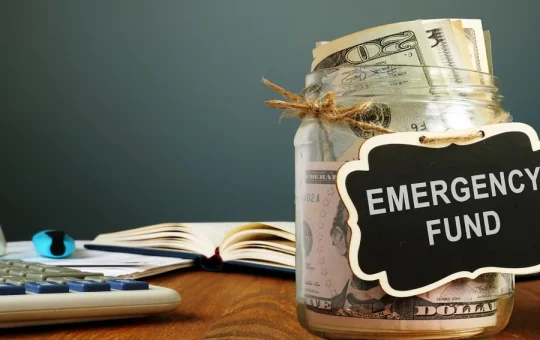
An emergency fund will be very helpful. Medical expenses, car repairs, job loss or other unexpected issues may strain your finances. If you have some extra cash saved up, you’ll be able to deal with these scenarios without resorting to excessive credit.
It is important to begin at a level that is manageable. It is better to save an amount that is constant over time than set a large target and then trying to reach it and failing.
Spend Smarter Without Giving Up The Things You Love
Your financial situation will change over time. What works on your budget now, may not work six months down the road.
Income can change. Rent can increase. New duties may emerge.There can be new duties to be had. Your priorities could shift as well.
This is the reason why saving money needs to be a continuous process and not a fixed rule.
Make a few minutes a month to check spending.
Notice patterns, don’t judge yourself.
Perhaps you spent more on transportation than you anticipated. Maybe you don’t use a subscription you’re paying for much. You might also find you’re saving money on food.
Take the information into account when adjusting your budget.
Don’t let one high bill be the reason to surrender. No one doesn’t have any sort of surprise costs or times when they’re spending more than they usually do.
But the important thing is to get back on track with your plan.
Progress can also be celebrated practically. These are important life goals to reach, like saving to your goal, paying off your debt, or sticking to your budget.
Economizing is easier when you track your progress rather than only what you can’t do without.
Review Your Progress And Adjust Your Plan
Your financial situation will change over time. What works on your budget now, may not work six months down the road.
Income can change. Rent can increase. New duties may emerge.There can be new duties to be had. Your priorities could shift as well.
This is the reason why saving money needs to be a continuous process and not a fixed rule.
Make a few minutes a month to check spending.
Notice patterns, don’t judge yourself.
Perhaps you spent more on transportation than you anticipated. Maybe you don’t use a subscription you’re paying for much. You might also find you’re saving money on food.
Take the information into account when adjusting your budget.
Don’t let one high bill be the reason to surrender. No one doesn’t have any sort of surprise costs or times when they’re spending more than they usually do.
But the important thing is to get back on track with your plan.
Progress can also be celebrated practically. These are important life goals to reach, like saving to your goal, paying off your debt, or sticking to your budget.
Economizing is easier when you track your progress rather than only what you can’t do without.
Final Thoughts
It’s all about a shift in your spending mentality when you start learning how to save money. You don’t need to cut out all the fun from your life or a hard budget.
Rather, establish a monetary system according to your priorities.
Understand your spending habits. Don’t sacrifice anything that brings you joy. Reduce wasteful spending. Automate your savings. Allow for treats from time to time and check in on the plan periodically.
The most effective saving plan is a plan that you can stick to!
As long as saving is a habit instead of a sacrifice, then your financial goals become more and more attainable. It is possible to save for the future, build an emergency savings account, alleviate financial stress, and still enjoy the present.
Saving money isn’t a matter of giving up. It’s about ensuring that your cash is going to the things that are most important to you.