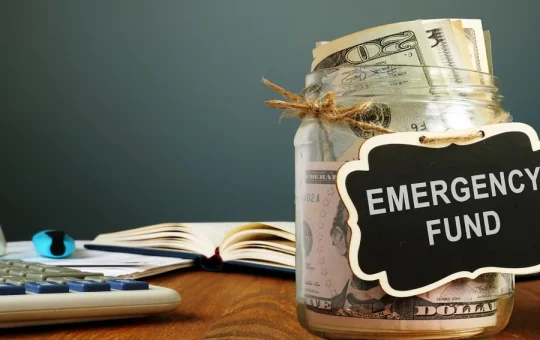
Emergency funds are funds that are designated to deal with unforeseen costs or emergencies, such as medical expenses, emergency home repairs, or unforeseen loss of income. A savings account is a larger repository for your money for short or medium-term savings objectives, including vacation, new phone, education, a down payment, etc. You can save in your emergency fund in savings account, but it is for different purposes. The key distinction is the reason for saving and when you hope to use the money.
One of the most crucial steps in handling personal finances is saving up money. However, many people confuse the terms emergency fund and savings account. They are associated, but they are not the same.
Knowing the difference will help make it easier to manage your finances and plan for emergencies. It can also help you not use resources that are intended for an important goal on an emergency.
So, is an emergency fund better than a savings account or is it a savings account better than an emergency fund? In most situations, it is logical to have both.
What Is An Emergency Fund?
An emergency fund is a fund of money set aside for unforeseen and essential outlays. It principal goal is to provide you with financial security if you get into a mess.
Suppose, for instance, that your car has to go in for a major repair. Or you will have an unexpected medical bill. Alternatively, you may lose your job or have a substantial decrease in your income.
These circumstances can strain your budget. Without an emergency fund, you might have to take out a loan, take money out of your investment account or charge it to your credit card.
An emergency fund is a financial cushion. It is not intended for the day-to-day buying or budgeting.
Examples of when to use an emergency fund:
- Unexpected medical and dental costs
- Home or appliance repairs that are urgently needed.
- Major vehicle repairs
- Sudden job loss
- The loss of income for a short period of time.
- Unplanned expenses that are critical for a family to cover for a specific event.
- Travel due to a serious family situation or emergency.
The idea is that you want to have an emergency fund available when you need it, but not so easily spent on frivolous things you don’t need.
How Much Should an Emergency Fund Have?
There is no fixed dosage, as it depends on the individual. Your goal should be based on your income, expenses, job security, debt, family life and other financial situation.
One of the most popular options is to save for three to six months of living costs.
If your monthly essentials are $2000, then you should have $6000 in your emergency fund. A six-month fund would be $12,000.
You don’t have to save the entire sum upfront, however.
If you’re beginning from scratch, the first step might be to cut down on your emergency savings. A small savings can make a difference to a small emergency. Then, you can slowly build up the fund as your finances improve.
What Is A Savings Account?
A savings account is a bank or financial institution account used to store money and usually with some interest. A savings account is not necessarily for a specific purpose like an emergency fund.
Savings can be used for planned spending and for a goal or objective.
For instance, you could open or save at a bank to save for:
- A vacation
- A brand new computer or cell phone
- Education expenses
- A wedding
- A home down payment
- Annual insurance payments
- Holiday shopping
- A large purchase
- A cost that is likely to occur in the future.
The key difference lies in the fact that savings are typically linked to a goal or a future expense, whereas an emergency fund is dedicated to handling unforeseen financial needs.
There are multiple savings accounts that you can have for various goals. Some banks even permit their customers to establish separate saving spaces or sub-accounts.
This can help to determine the funds available for each purpose.
Emergency Fund vs Savings Account: Key Differences
The primary difference between an emergency fund and a savings account is the reason.
Emergency funds are a financial cushion. A regular savings account is typically where people would save up for bills or to save for other things they plan on doing.
This is a rather simple comparison:
| Feature | Emergency Fund | Savings Account |
| Main purpose | Cover unexpected expenses | Fund planned goals and future purchases |
| Typical use | Job loss, medical costs, urgent repairs | Vacation, education, large purchases |
| Access | Should be easy to access | Usually easy to access |
| Recommended amount | Often 3–6 months of essential expenses | Depends on your specific goal |
| Spending | Only for genuine emergencies | Can be used when the planned goal arrives |
| Priority | Financial protection | Financial planning |
| Location | Often kept in a separate savings account | Usually held in a savings account |
This comparison is significant in another way too: you don’t necessarily need to have a dedicated bank account for your emergency fund.
A savings account can be used for your emergency fund. It is not the account, it is the intent of the money that makes it an emergency fund.
Should You Keep Them in Separate Accounts?
It’s useful for a lot of people to save their emergency savings in a different account than their goal savings.
Let’s say that you had $5,000 in one savings account. You estimate it to be $3,000 for emergencies and $2,000 for vacation.
Having $5,000 as one of your available balances may make it easy to make unnecessary purchases. It helps establish a clear cut boundary when it comes to having a separate emergency fund.
You might have:
- Emergency savings: $3,000
- Vacation savings: $1,000
- New computer savings: $1,000
The way this works is that your financial priorities will be easier to keep track of.
It can also prevent you from the wrongful spending of funds that you planned to hold for an emergency.
Why You Need An Emergency Fund And Regular Savings
It is important to not forget to save for other life goals while you are saving for your emergency fund. The two collaborate.
Imagine that you have a variety of jobs and a variety of wage rates.
You can pay your bills and pay your bills regularly in your checking account. Your emergency fund safeguards you against financial disasters. If you set a savings target, you can save the money needed to make your dreams a reality, rather than borrowing it.
This division can help make your budget more predictable.
An example of this is when your washing machine breaks down, you can pay with your emergency fund rather than using your vacation fund. Once you’ve had your vacation that money is still yours.
One of the key advantages of separating emergency savings from regular savings is that this will allow you to save money in a much more effective manner.
What Counts as a Financial Emergency?
Not all “unsuspecting purchases” are truly emergencies.
Typically an emergency is an expense that is necessary, unexpected and hard to put off.
If you have a broken water heater, it might be eligible. A discounted TV does not likely.
You can tell you’re on the right track if you can ask yourself:
- Did this cost come as a surprise?
- Is it necessary?
- Is it feasible to put off the payment for it?
- Can I get any other source of money in my budget for it?
If the response indicates the cost is truly necessary, you can make a use of your emergency fund.
The definition may be different for each individual. In the case of a person who has an older vehicle, they will have to get ready for more regular repair expenses. Different risks may be faced by a homeowner than by a tenant.
It is not intended to be a definitive list. It’s about safeguarding your finances against major and unexpected disruptions.
Where Should You Keep an Emergency Fund?
Traditionally, an emergency fund is held in a safe place that is also easy to access and where you won’t be tempted to use your money regularly.
A savings account may be a good option since the money is generally readily available without having to sell an investment.
In selecting an account for emergency savings, keep in mind the following:
- Accessibility: You should be able to get the money when an emergency occurs.
- Safety: Don’t risk unnecessary investment in emergency money.
- Competitive Interest: If you can save money with a competitive interest rate, over time you’ll see your savings increase.
- Avoid unnecessary account fees that deplete account.
- Separation: Save emergency funds separately from regular savings to avoid the temptation to use the money for other purposes.
Depending on your country and financial institution, you will be able to choose from different types of savings account. When opening an account, check the fees, withdrawal policies, interest rate and deposit insurance.
How To Build An Emergency Fund And Savings At The Same Time
When you have little money saved, you can ask yourself which priority should you set for your goal.
One good strategy is to start with a small emergency fund and gradually increase the amount saved in the emergency fund while also saving for future objectives.
This process can be followed as, for example:
Step 1: Determine your “need to have” costs.
Calculate the expenses that you would have to cover if you didn’t spend money on anything that isn’t essential. Add housing, food, utilities, transportation, insurance, debt payments and other expenses that are needed.
Step 2: Make a starting emergency target.
Select an amount that would pay for a smaller misfortune. The amount will vary based on individual situations.
Step 3: Automate your savings.
Establish an automatic transfer following regular paycheck or periodic transfer. It is possible to accumulate contributions, even if it is only a small amount.
Step 4: Set up specific savings objectives.
After you have established a basic emergency cushion, begin saving for intentional spending like travel, education or big purchases.
Step 5: Gradually build your emergency savings.
Save for a bigger emergency fund–three to six months of necessary expenses–if feasible for your situation.
Step 6: Rebuild following use.
Don’t think that you’ve finished the job if you have to use your emergency fund. Put restoration of balance on the agenda.
There is no need of an excessive amount of funds to get going. It’s important to be consistent, not perfect with the first deposit.
Common Mistakes To Avoid
A frequent error is thinking of all savings as “spending money.
It’s not like money in a savings account automatically becomes money for a shopping trip or it’s just sitting there for a spur of the moment purchase. It can be easier to stick to your budget if you have a goal for every part of your savings.
The other error is maintaining an emergency fund in stocks that may fall in value during time of crisis. There is nothing wrong with low rates of return on emergency savings.Emergency savings does not require high returns, but stability and accessibility.
It’s also simple to establish an emergency fund objective and forget about it. The costs may fluctuate in the future. Your emergency fund goal may need to be adjusted if your rent, mortgage, family needs or necessary monthly expenses go up.
Lastly, don’t despair if you can’t save a lot of money in the beginning. Creating financial security is generally a long-term endeavor.
Final Thoughts
The key difference between an emergency fund and a savings account is that the fund is used for emergencies, while the savings account is used for other purposes.
An emergency fund is used to keep you safe from unwonted financial issues. A regular savings account is usually used for things you want to save for, or expected expenses. It may be possible to house your emergency fund in an emergency savings account, but if you separate your savings from your emergency fund, your financial plan will be easier to manage.
Try to construct both, if you can. Begin with a modest emergency fund, and gradually save towards your needs for several months. Meanwhile, make different savings objectives for future plans and purchases.
The outcome is an easy, effective system: Your daily dollar is for today, your savings will be for tomorrow, and your emergency fund will be for an unexpected day.