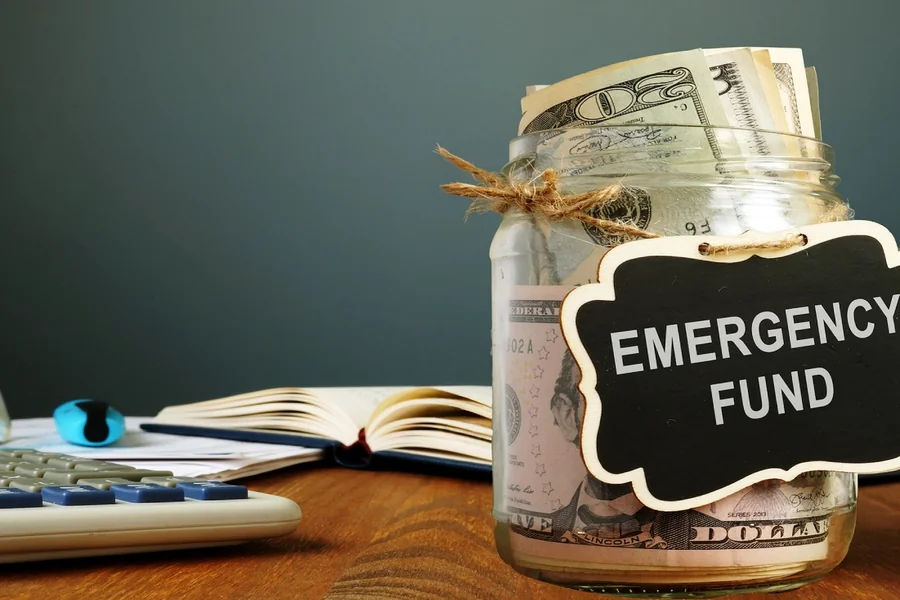
An emergency fund is the money saved for emergencies, such as a loss of income or large, unexpected expenses, that is not paid out on a credit card or loan. Three to six months of living expenses is a good rule of thumb. But it is dependent on your income, job security, monthly bills, debt, health requirements and family obligations. A person on a stable salary with low expenses may require a lesser amount, while a freelancer, single person or someone with an unstable income may want to save 6 to 12 months of their expenses.
Making savings in emergency funds is one of the easiest steps to a more stable financial life. It provides financial protection in the event of an unforeseen event, like a pay cut, significant repair, medical bill, or other unanticipated family cost.
However, just how much should you save?
The general rule is to have an emergency fund with three to six months’ worth of living expenses. That’s a good place to start, but it’s not a standard that is guaranteed to apply to everyone. The amount you want to save in your emergency fund should depend on your financial situation and how soon you could replace your income if you lost it.
Let’s figure out the correct number and how to create an emergency fund that works for you.
What Is An Emergency Fund?
An emergency fund is an amount of cash set aside for unplanned and essential costs. It is not for vacation, shopping, gifts or planned purchases. The primary function is to ensure you aren’t caught off-guard and end up with a debt obligation that’s not affordable, or borrowing funds that should be used for a different objective.
Common emergencies include:
- Losing your job or main source of income
- A significant repair job on the car or home.
- Unpredictable health and dental costs
- Urgent family-related costs
- A travel that is necessary due to an emergency.
- An unexpected drop in employment or earning in the business
- Pay attention to an essential household appliance which must be replaced.
The word emergency is the most important word. Your “Emergency Fund” should be there when you really need it, and not automatically used for day-to-day expenses.
This will also help to make sure that this cash is not spent needlessly. Having a separate savings account may be helpful to maintain a distinction between funds used for emergency savings and for regular payments.
How Much Should You Keep In An Emergency Fund?
The typical goal is to save three to six months’ worth of living expenses for many families.
The key is that you need to determine this based on your S.N.B. (essential expenses) and not your monthly lifestyle expenses.
If you have regular bills of $1,000, your essential bills are:
- Housing: $1,200
- Groceries: $500
- Utilities: $200
- Transportation: $250
- Insurance: $200
- Minimum debt payments: $150
- Other essential costs: $200
That gives you $2,700 in essential monthly expenses.
Your emergency fund targets would then look like this:
- 3 months: $8,100
- 6 months: $16,200
- 9 months: $24,300
- 12 months: $32,400
It doesn’t matter if you save the whole $6,000 right away. Begin with a smaller goal and build up on that.
A good initial goal is $1,000, or an amount that will cover one typical unexpected expense. After you meet the essential expenses, work toward one month of essential expenses. Thereafter, you can incrementally progress to three months, six months or more.
The correct target is the amount that really provides you worthwhile protection without hindering your progress in other meaningful money objectives.
Factors That Determine Your Ideal Emergency Fund
While the guideline of saving three to six months is helpful, there are several factors that can alter the amount of savings you need.
Job Stability
One of the most important is the state of your job.
You might be in a position to feel comfortable with an emergency fund of three months or more, if you have a stable job, have strong job benefits and have strong demand for your skills.
A bigger fund may be more appropriate if your income is irregular, or if it will take a few months to find work.
Individuals who work for themselves, freelancers, contractors or those who earn commission should set aside 6-12 months of crucial expenses.
Number of Income Sources
A two income earning household may carry less risk compared to a one income earning household.
For instance, if one partner is jobless while the other earns enough to pay the bills for the major necessities, the family may not require such a big emergency savings cushion.
However, if you’re only earning a single income in the home, a bigger emergency fund can offer extra security.
Monthly Expenses
Your monthly expenditure is also important.
For example, someone who must spend $1,500 a month to pay for essentials will require less emergency savings than someone who must spend $5,000 per month to pay for essentials.
That is why it is not always the best strategy to use a percentage of your income. The purpose of an emergency fund is to pay for expenses, so your estimate of the size of the fund should be based on the essential expenses you need to pay each month.
Debt and Financial Obligations
Generally, debt payments are a necessary expense and if there is a minimum payment, you will want to continue making it.
If you have a mortgage, car loan, student loan or credit card debt, your emergency fund should include the amount you would need to pay if a financial emergency occurs.
It’s important to note that while creating an emergency fund, you may not have to pause your debt repayment efforts. It may be necessary to pay off high interest debts while building up an emergency fund.
Family Responsibilities
Your goal may also be influenced by your financial commitments.
Parents with children can have more out-of-the-ordinary costs than a single person. This is also true for those who provide financial assistance to parents, relatives or other family members.
If you have a large family or other dependents, it may be wise to maintain a larger emergency fund.
Should You Save Three, Six, Or Twelve Months?
There’s a number for everybody, but there is no single number to follow for all of us.
Consider the range as a guideline, not a rule.
Three months of expenses may be reasonable if:
- You’re on a stable job.
- Your income is stable.
- Your basic costs to keep you going are relatively low.
- There are at least two sources of income for the household.
- There are good employment opportunities available.
- You have other available means of finance.
Six months may be better if:
- You are the chief breadwinner.
- Your position is somewhat at stake.
- You have children or other dependents.
- You have expensive monthly bills.
- You have a lot of investments to make.
- It can take several months to replace your income.
Six to twelve months may make sense if:
- You work for yourself or are a freelancer.
- The money you make varies a lot from week to week.
- Your work is in an industry where there are long periods of inactivity.
- You have a single irregular income for your household.
- You have substantial family responsibilities.
- There are few other financial options available.
It is not about economizing as much money as you can. To have adequate cash flow to manage a reasonable financial crisis.
Where Should You Keep Your Emergency Fund?
An emergency fund should be accounted for, easily accessible, and set aside from your regular spending budget.
A savings account may be a good option since the money can be accessed whenever the person needs it without exposing the fund to typical market variations.
Some alternatives to consider are:
- It is a high-yield savings account.It is a high-yield savings account.
- A typical bank savings account.
- A money market deposit account
- A other low risk, high liquidity savings option
Accessibility is a priority. You shouldn’t take risks for high investment returns with your emergency savings.
An asset’s value can drop when you need it most, which is the case with stocks, cryptocurrencies and other volatile investments. The purpose of an emergency fund is to give stability, not to try to get the highest possible return.
It’s also a good idea to not have all of the money left at home in cash. Although it may be convenient to keep some physical cash on hand to handle emergencies, it may end up being a liability if someone knocks on the door looking for it, forgets to keep it in a safe-deposit box, or it gets lost or damaged.
How To Build An Emergency Fund From Scratch
Saving several months of expenses can feel overwhelming, especially if you are starting with little or no savings. Breaking the goal into smaller steps makes it more manageable.
Start by calculating your essential monthly expenses. Look at your housing, food, utilities, transportation, insurance, minimum debt payments, and other costs you would still need to pay during a financial emergency.
Next, choose an initial target.
For example:
Step 1: Build a starter emergency fund.
Take into account the amount that might be able to pay a smaller unexpected expense.
Step 2: Save one month of essential expenses.
This provides you with a greater safety net in terms of finances.
Step 3: Build toward three months.
This can provide meaningful protection against temporary income disruption.
Step 4: Consider six months or more.
Increase your target if your income is unstable or your financial responsibilities are high.
You can make this process easier if you set it up so that money is transferred from your checking account to your savings account every time you get paid.
All contributions are significant, no matter how small. If he saves $100 a month, without accounting for any interest on the savings, he will have $1200 saved in one year. The more you can do the sooner you will make progress.
Windfalls can also be of assistance. Instead of using the money for urgent needs, it can be saved in your emergency fund from tax refunds, bonuses, gifts, or from selling off unused items.
One of the most important things to remember is not to compare your emergency fund to another person’s. The goal should be yours and based on your risk, income, and expenses.
When Should You Use Your Emergency Fund?
An emergency fund is a good thing to have, but only if you will use it when an emergency occurs.
For anyone that loses their job, has a significant needed repair or receives an essential bill unexpectedly, it is the purpose of the fund to utilize your savings.
But all the unplanned spending isn’t an emergency.
A discount holiday, a new phone or holiday shopping or an upgrade you want but don’t need is typically a different kind of savings.
To the extent possible, before tapping into your emergency fund, consider the following:
- Does the cost come as a surprise?
- Is it necessary?
- Is it required to be paid immediately?
- Is there a sensible alternative method of covering it?
- Would I be able to afford to take on a big loan if I used my emergency fund?
If the response suggests it’s an actual emergency, it may be a good financial move to use the money.
Once that is done, put restoring the fund as a priority. You don’t have to pay off the whole amount at once. Continue regular contributions and slowly increase back to your goal.
Final Thoughts
So, what is the amount you should set aside for your emergency fund? The three to six months’ rule is a safe guideline for most people to follow. However, if you have more or less stability in your job, income, family obligations, debt and monthly expenses, your number could be lower or higher.
Starting on a new computer or with no backup, do not be dissuaded by the six months. Try to concentrate on what’s next. Develop a small reserve, then a month’s expenses, and, ultimately, three to six months.
An emergency fund is not about forecasting all the financial challenges. It’s about allowing yourself the freedom to react to an unexpected event.
The ideal emergency fund is a large enough amount that it will protect you from the loss of your home, enough to be available in an emergency, and realistic enough that you can actually save and maintain the fund.


2 Comments