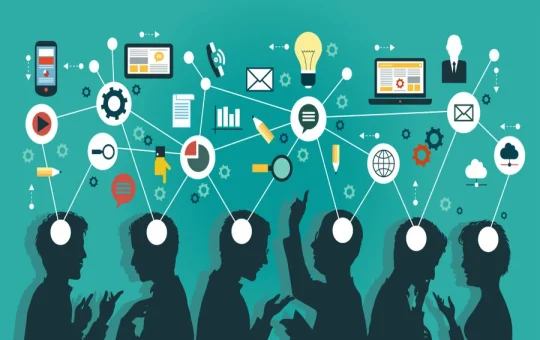
Design thinking is a problem-solving method that starts with the needs of real people. Teams learn about users, identify the essence of the problem, ideate, prototype and test the prototypes before launching.
A design-led transformation is a transformation that is applied to a whole business, influencing the products, services, processes and culture of the business. The ultimate objective is to make decisions on the basis of customers’ data and not on the basis of assumptions. This is a way to avoid costly mistakes, catch someone up on speed and enable organizations to offer products and experiences that people are ready to value and make use of.
Why Design-Led Transformation Matters
Most businesses don’t fail due to lack of ideas. They do not succeed because they create something that no one needs or because it is too difficult to use. The design-led transformation takes this all into account by focusing on the needs of the customer in all decisions.
Traditionally design was seen as an afterthought in the project. One organization would determine the design of what to build and one designer would create a beautiful design. designers and engineers collaborate with the marketers and managers from the outset in a design-led company. They consider the problem first, the solution second.
This change is more significant in today’s age, when there are numerous options available for the customer. With a confusing app, a slow checkout process, or a cold service, your customers can easily click away in a few moments. Companies with an understanding of their users stand to have a tremendous advantage.
The Five Stages of Design Thinking
Design thinking follows a loose, repeatable process. The stages are not necessarily followed in sequence and teams may move from one stage to another and back again. However, the understanding of the stages gives beginners an idea of how the process works practically.
- Empathize: Speak with customers, watch how they interact with your product and listen without guiding the customer toward an answer.
- Define: Break out what you learned and articulate it as a problem statement, for example: “New users are leaving sign-ups because the sign-up form is lengthy.
- Ideate: Brainstorm a lot of potential solutions. Now, it’s more about quantity than quality.
- Prototype: Make a low cost, rough version of the best ideas. This may be a sketch, a mock-up (which is clickable), or a paper model.
- Test: Show the real users the prototype, see what happens, and make changes based on the test results.
The most important habit in this is learning at a young age. It costs nearly nothing to make a paper sketch that fails. A completed product with a failing product can be a costly and time-consuming months-long effort.
How Design Thinking Improves Business Results
Design thinking isn’t all about the pictures. It’s reflected in many aspects of the business, many of which have an impact on revenue directly.
Better customer experience
Teams learn about real life friction when they study real people. Addressing these minor issues, such as having a difficult-to-navigate menu or a vague error message, can result in increased satisfaction and reduced support inquiries.
Lower risk and less waste
Early testing results in the elimination of poor ideas before they cost a lot of money. Teams invest less time in features that nobody uses, and more time on the features that do solve real problems.
Faster and clearer decisions
Prototypes provide a tangible experience for people to respond to. A team can test a simple version with 10 customers, and move to the next version based on the feedback.
Stronger teamwork
Design thinking involves multiple departments in the same dialogue. Sales listens to what support hears. Engineers observe customers as they interact with their products. This common understanding decreases handoff issues and miscommunication.
More room for innovation
The process stimulates many ideas and rapid experiments, making teams feel more comfortable with new ideas. This ultimately creates an environment where it is normal to try a small amount, and not a dangerous risk.
Design Thinking vs. Traditional Business Approach
The table below shows how a design-led approach differs from a more traditional one in day-to-day work.
| Area | Traditional Approach | Design-Led Approach |
| Starting point | Internal goals and assumptions | Customer needs and observed behavior |
| Role of design | Final polish after decisions are made | Involved from the first discussion |
| Decision-making | Based on opinions and past habits | Based on testing and user feedback |
| Development style | Long build, then launch | Short cycles of build, test, and improve |
| Risk of failure | Found late, after high spending | Found early, at low cost |
| Team structure | Separate departments | Cross-functional teams |
Neither column is always right or wrong. Many companies use a mix. The point is that the design-led column gives you earlier and cheaper signals about what works.
Practical Examples in Different Industries
Design thinking is applied not just in the tech industry. Let’s consider some reasonable scenarios on which it applies.
Retail: A clothes shop sees that the customers are adding the products into their online shopping cart but not proceeding with the payment. The team interviews consumers to uncover the disconnect around shipping and find out it brings uncertainty. They test a version which displays total cost up front and checkout completion increases.
Healthcare: A clinic wants to reduce patient no shows. Reminders are not effective and scheduling with patients is challenging. Reminders with a 1-Tap rescheduling feature are piloted with a small group of people prior to a wide launch.
Challenge: When a bank finds they are struggling to find new customers to open an online account. When you examine the actual signups you’ll see it’s confusing users with its identity upload step. The time is decreased with a new step and instructions.
Manufacturing: A company visits the job sites to observe workers. They understand that using a common tool with gloves on is not easy. Once a handle is prototyped and tested it is a new product line.
Each time the improvement process started with observation and listening, but never with guesswork.
How to Start a Design-Led Transformation
It isn’t necessary to change the entire company overnight. A gradual approach will tend to be more effective and will foster trust as it proceeds.
- Select a real-world issue. Pick something that you can measure, such as low conversions or many complaints.
- Form a small and wide-ranging group of students. Involve designers, technologists, operators and customers.
- Get users involved at the beginning. Talk with 5-10 conversations. Patterns typically catch up to people quickly.
- Prototype quickly. Use simple tools. The goal is learning and not perfection.
- Test and measure. Determine a success measure before you begin: More tasks done in less time or fewer support tickets.
- Share results openly. By motivating other teams to understand the value and getting them interested, their small wins help.
- Repeat and expand. After successful use of the method in one project, apply it to another project.
It’s also leadership support. Asking “What did customers say?” instead of “What do we think??” percolates down the organization instead.
Common Challenges and How to Handle Them
Change, often, is not easy. Understanding some of the common troubles will help prepare you.
Resistance to change. Users who are accustomed to the old methods, see user research as extra work. Demonstrate them a small pilot that they can see, rather than make the case in theory.
Taking it as a stand-alone workshop. While a workshop can be inspiring, it is not necessarily a transformative experience for a company. The technique has to be incorporated in the projects.
By-passing the testing phase. Some teams collect feedback and then go with the plan they previously decided on. Beware of red flagging if evidence changes.
Unclear measurement. If there are no goals, it is difficult to make the case for the effectiveness of the approach. Include a metric for each project (such as conversion rate, satisfaction score, time saved, etc.).
Short amount of time and budget. This is the design thinking process that has a tendency to get “stuck. In truth it can save time in rework later. Do small amounts and have short sessions.
Final Thought
Design-led transformation isn’t about getting onto the bandwagon of new trends, it’s about creating a consistent habit: designing for people, first; understanding people, second. So, it only has to be applied in a small team this month, but can be scaled up for a large organisation.
Have a problem, talk with some real users and try out a tentative solution. The lessons in this first micro project will lead you to the next step and the lessons make the case for wider change more than any presentation.
FAQs:
What is design-led transformation?
It is a way of changing a business so that customers need to guide decisions about products, services, and processes. Design thinking methods are used across teams, not only by designers.
How does design thinking improve business performance?
It helps teams find real customer problems, test ideas early, and avoid costly mistakes. This usually leads to better products, higher satisfaction, and less wasted effort.
Is design thinking only for large companies?
No. Small businesses and startups can use it with very little budget. Customer interviews and paper prototypes are often enough to begin.
How long does a design thinking project take?
It depends on the problem. A focused project can run from a few days to a few weeks, while a larger transformation may take months and happen in stages.
What skills do you need to start?
Curiosity, good listening, and willingness to test ideas. You do not need a design degree, although having a designer on the team helps.
How do you measure the success of design thinking?
Track results tied to the original problem, such as conversion rate, task completion time, customer satisfaction, support requests, or repeat purchases.